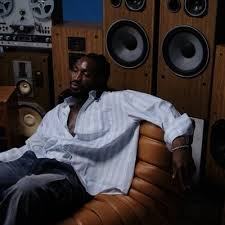
Afrobeats have not been particularly kind to its elders. It remembers them ceremonially, not conversationally. It celebrates them in anniversary debates and “greatest of all time” lists before quietly returning to the business of chasing younger stars.
Somewhere along the way, longevity became another audition. Veteran artists were no longer judged by what they had built, but by how convincingly they could imitate the generation they had helped create.
That burden hangs heavily over KING COAL, Wande Coal’s fourth studio album. More than seventeen years after Mushin 2 Mo’ Hits permanently altered the melodic grammar of Nigerian pop, Wande Coal has cultivated one of Afrobeats’ most selective catalogues. Every studio album has therefore arrived carrying unusual weight, not simply because of the music itself, but because each one inevitably reopens the conversation about his place in the genre’s evolving story.
For years, that conversation has sounded strangely familiar. Can Wande Coal still keep up? Can he still sound current, and can he still compete? Understandable questions, but also wrong ones. Wande Coal’s KING COAL doesn’t sound like an album interested in winning a race. It sounds like an album questioning why the race exists at all.
The laziest reading of KING COAL is to call it a legacy album. Frankly, It isn’t. Legacy albums usually spend their time looking backwards. KING COAL spends its time standing still. That may sound like stagnation until you realise that stillness and stagnation are not the same thing.
One comes from creative exhaustion. The other comes from authority.Only artists certain of their influence can afford not to chase it. That’s the album’s quiet revelation. On KING COAL, Wande Coal no longer sounds interested in competing with his “sons.” Not biological, of course, but musical descendants.
The opener, Feelings, establishes that posture immediately. There is no grand declaration of reinvention, no oversized production designed to announce a new era. Wande instead leans on what has always separated him from his peers: melody. His phrasing breathes. He leaves silence where younger singers often insert unnecessary vocal runs, trusting restraint to carry the emotion. Even the production understands this philosophy, resisting clutter in favour of warm textures that allow his voice to settle naturally into the record. It is a reminder that technical ability isn’t always measured by how much a singer does, but by how confidently he decides what not to do.
That same confidence shapes DEARLY with Qing Madi. On paper, it looks like a symbolic meeting of generations. In practice, it becomes a lesson in musical perspective. Qing Madi approaches the record with youthful fragility and curiosity, while Wande sings with the composure of someone who has spent nearly two decades refining the emotional language she now explores. Rather than competing for attention, the two voices complement each other beautifully, their harmonies feeling earned rather than engineered.
The result isn’t a passing of the torch. It’s proof that the torch has been burning all along.
The album reaches its clearest artistic statement on GBESUNMO with BNXN and Ruger. The brilliance of the collaboration isn’t that Wande Coal outperforms either artist. It’s that he never seems interested in trying.
BNXN twists melodies into intricate patterns. Ruger attacks the rhythm with his characteristic swagger. Wande responds by doing less. Fewer vocal runs. Cleaner phrasing. Longer breaths. At first, the restraint feels almost understated. Then it becomes obvious what he’s doing.
There’s another reason the collaboration works. Wande never approaches BNXN and Ruger like rivals. He approaches them like continuations. Most legacy acts spend collaborations with younger artists trying to prove they still belong in the room. Wande behaves as though the room was furnished with ideas he left there years ago.
Then there’s Must Be Love with Tiwa Savage, perhaps the album’s most understated triumph. In an era where chemistry is often confused with flirtation and romance is engineered for thirty-second clips, both artists embrace something less fashionable: emotional maturity. Their performances are conversational rather than theatrical, allowing the songwriting to breathe instead of overwhelming it with unnecessary embellishment. The song quietly argues that intimacy doesn’t always have to arrive dressed as excitement. Sometimes, believability is enough.
That isn’t to say KING COAL is beyond criticism.Its greatest weakness is that refinement occasionally comes at the expense of revelation. Wande Coal remains one of Afrobeats’ finest melodists, but the album rarely delivers the kind of seismic creative moment that once made records like Ololufe, You Bad and Bumper to Bumper feel years ahead of their time. Too often, KING COAL settles for beautifully executed familiarity where it could have risked genuine surprise.
Then again, perhaps expecting pioneers to reinvent the genre every time they release an album misunderstands what pioneers are for. Not every architect needs to redesign the skyline. Sometimes the greater achievement is reminding everyone why the foundation has never cracked.
Perhaps the greatest compliment you can pay KING COAL is that it never behaves like a fourth studio album. For years, Afrobeats kept asking whether Wande Coal could outrun the generation that borrowed his melodic grammar.
KING COAL answers with remarkable composure. Fathers don’t race their sons. They watch them run.
Rating: 8.7/10