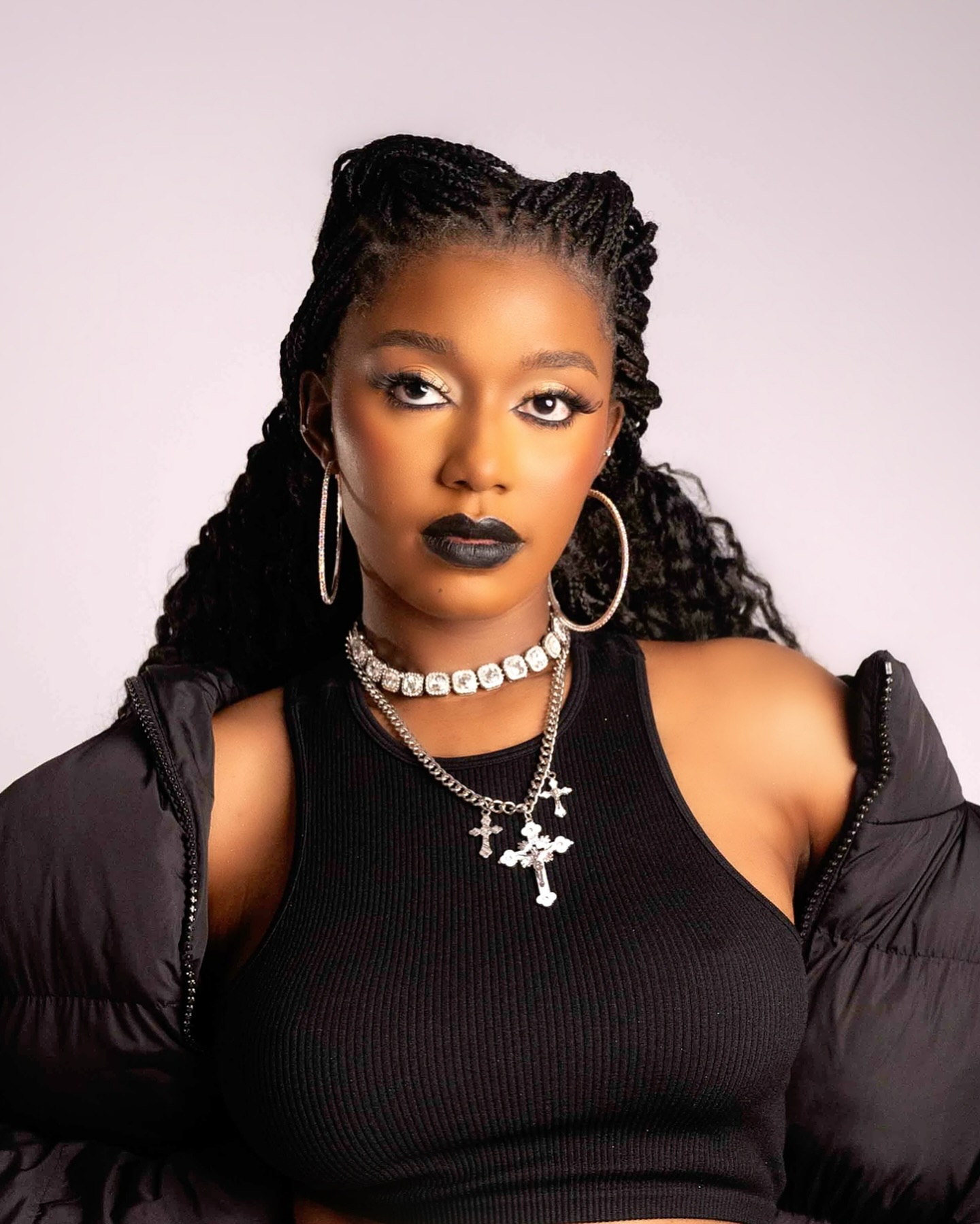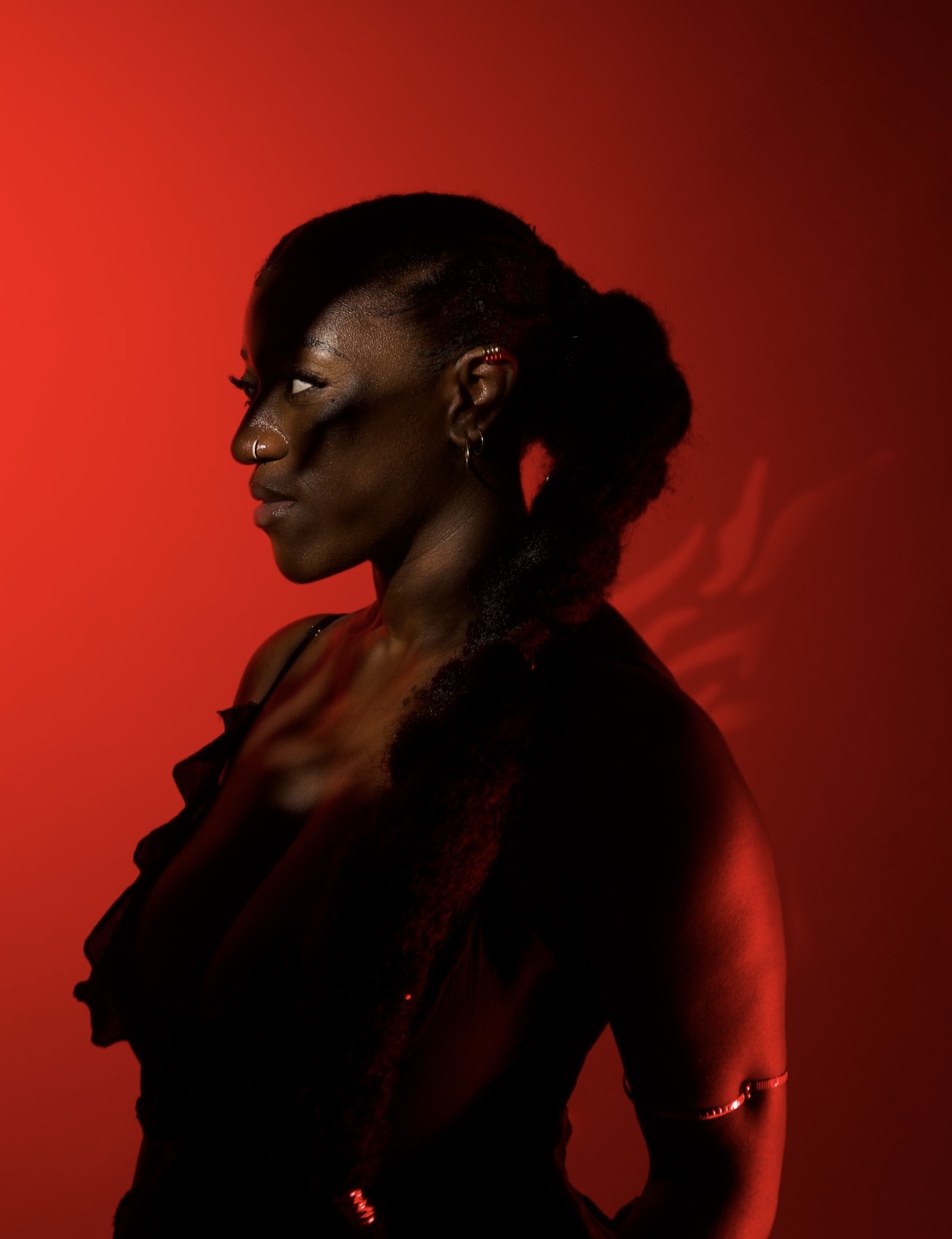
Behind every landmark live performance is a creative mind shaping what audiences hear, often long before the lights come on. As a Music Director, composer, producer and arranger, Bakare Michael Seyifunmi has become one of the defining behind-the-scenes figures in contemporary Afrobeats, translating some of the genre’s biggest records into ambitious live experiences. From leading Adekunle Gold’s international performances to composing the majority of the orchestral arrangements that have reimagined his catalogue, Seyifunmi occupies a rare space where technical precision meets creative interpretation.
His work extends far beyond the stage. With production credits spanning artists such as Davido, Simi, Olamide, Mayorkun, Pheelz and Teni, alongside academic invitations from Guildhall School of Music & Drama and Mansfield College, Oxford, his career reflects the growing recognition of Afrobeats as both a performance tradition and a serious musical discipline.
In this conversation with Upper, he reflects on the craft of music direction, the demands of orchestral composition, and the evolving role of the creatives shaping African music from behind the scenes.
Upper: Adekunle Gold’s orchestral concerts have been described as some of the most ambitious live productions in Afrobeats. When you first conceived these arrangements, what did you want audiences to hear that they had never heard in these songs before?
Seyifunmi: I wanted them to hear a bigger version of the songs. But most importantly, orchestra isn’t what everybody listens to, it’s like the golf of music. Not everybody watches golf, but it’s premium. Orchestra is new to most of the audience, so I had to strike a balance between what they were used to and something more sophisticated. I had to sit right in the middle.
I wanted them to feel at home, and when I say home, I mean what they’re used to hearing. So I was really working between three things: keeping the originality of the sound, doing an arrangement that wasn’t so far from what they know that it would sound alien, and at the same time introducing them to the world of orchestra
.
That’s why I had to create pockets for every moment, a pocket for originality, a pocket for the “wow” moments, and a pocket for the orchestra, so everything complemented each other. It wasn’t too far from what they knew, but at the same time it sounded fresh and big. That was my goal, and I think we achieved it.
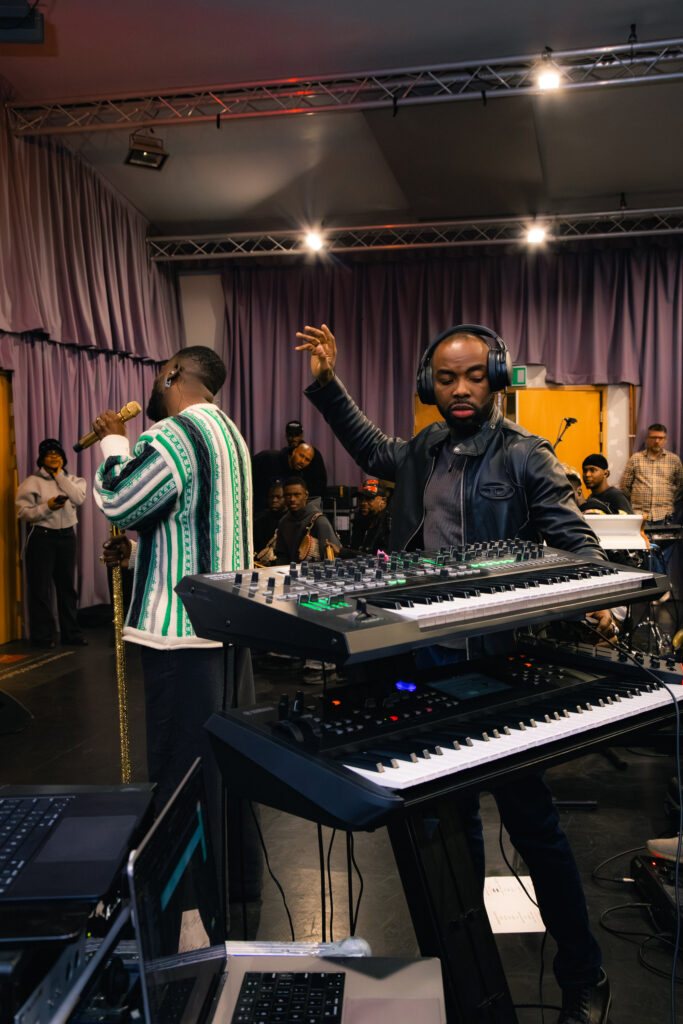
Upper: As Music Director, your job extends beyond writing scores—you also lead the band, the orchestra and the entire musical execution on stage. Where does composition end and live direction begin for you, and how do those two roles constantly influence each other?
Seyifunmi: The two roles are intertwined. Composition never really ends, it happens from the studio to the stage, though the larger part happens in the studio and slows down after the first rehearsal with the band and the artist.
Most of the time, I compose and arrange the music, then send it to the artist to approve before it goes to the band. But at that first rehearsal, the artist might chip in some advice, or hear something once it’s live that wasn’t there before, and I go back and adjust based on their comments.
Live direction also begins at that first rehearsal, because I know exactly what I want to hear from the instrumentalists, but I still try not to micromanage them since they’re professionals. From there, I become like a football coach, like Jose Mourinho, one of my mentors.
On stage, I split my focus between the artist, the band, and the production team, cueing the sound engineer to bring up the guitarist’s volume before a solo, singing a melody for the guitarist to play because I feel the crowd’s energy, or telling the artist to sing a part based on the vibe of the room.
That’s why a performance can shape my next composition, what you hear in the last show isn’t always what you hear in the next one.
Upper: You’ve reimagined records like High, Party No Dey Stop, Sade, Ogaranya and Rodo for an orchestral setting. Which arrangement challenged you the most creatively, and what made it particularly difficult to translate?
Seyifunmi: The song “High” was a bit challenging because it’s a very big party song. People know what they want to hear, and with those kinds of songs, you don’t want to do too much, you don’t want to kill the essence of the original version. You don’t even need to overdo it, the crowd will make noise and vibe to it regardless.
So I had to create pockets for the live orchestra while still maintaining the originality, things like a short, big orchestra intro, moments for the crowd to sing along so they feel part of the performance, strings and brass parts woven in between, and a crazy full orchestra outro.
Upper: The National Theatre concert marked the venue’s first major concert after its renovation and featured the MUSON Orchestra. Beyond the headlines, what did that moment mean to you as someone helping shape Nigeria’s evolving live music culture?
Seyifunmi: The National Theatre will always be part of my story. I’ll talk about it till the end of my career because it was a huge moment that shaped live music culture in Nigeria, and most importantly, that venue means a lot to me personally. The first time I was there was on a school trip from my primary school, so to come back and perform on that same premises means a whole lot to me.
Upper: Afrobeats conversations often celebrate the artist at the front of the stage, while the architects behind the music receive far less attention. Do you think the industry has reached a point where Music Directors, arrangers and composers are getting the recognition they deserve?
Seyifunmi: Honestly, the way the world works right now doesn’t really celebrate the people behind the scenes, only if you blow your own trumpet. It’s really the few who make noise that get seen. It would be nice to see Music Directors, composers, and arrangers get that recognition.
One of my mentors, Quincy Jones, did it. He made noise, he made his mark, and he even did his own shows as a composer, arranger, and music director. That’s the kind of visibility I’d love to see more of, because a lot of what people fall in love with in a song or a show starts with the work we do behind the scenes.
Upper: Following the Royal Festival Hall performance, you were invited by Guildhall School of Music and later Mansfield College, Oxford, to speak about your work. Did those invitations change how you view the global academic interest in Afrobeats as a serious musical tradition?
Seyifunmi: The invitations to Guildhall School of Music and Mansfield College made me realize there’s a huge global interest in Afrobeats music. The sound interests them, the rhythm, the way we approach music is different, so they want to know more about it. You hear them asking questions about legends like Fela, Sunny Ade, questions about the kind of organic instruments we have, and things like that.
For me, that’s proof that Afrobeats is no longer just being consumed, it’s being studied. When institutions like that invite you to sit with their students and speak on your process, it means the world is starting to look at what we do as a serious musical tradition, not just a sound that’s trending.
Upper: Your catalogue spans work with Simi, Davido, Pheelz, Olamide, Teni, Mayorkun and Adekunle Gold, yet each artist has a distinct sonic identity. As a producer and arranger, how do you leave your fingerprints on a record without overshadowing the artist’s own voice?
Seyifunmi: As a music producer, I always make sure I respect the voice of the artist, and the artist themselves. That helps me shape the record, it helps me leave my fingerprints on the project without overshadowing the artist. I’m a soulful music producer, any music I make has a lot of soul in it. While doing that, I also have to make sure the artist’s persona shines through in the music. That’s how I’ve been able to create a balance, you’ll always feel my hand in the production, but you’ll never mistake whose song it is.
Upper: You produced Teni’s “Uyo Meyo,” one of Nigeria’s most celebrated recordings, and now you’re orchestrating large-scale concert experiences. Looking back, what thread connects the producer you were then to the Music Director you’ve become today?
Seyifunmi: I’d say the thread that connects the producer I am, and have always been, to the Music Director I’ve become is intentionality, and sincerity. I make music from my heart, not just from my fingers. If you want to write orchestral music, you have to go deep inside you, you have to reach the music man inside you. That’s the same way I’ve always approached music production, because I believe that if you create music from your heart, it goes straight into the heart of the listener.
Upper: As Afrobeats increasingly embraces orchestras, theatre spaces and more sophisticated live productions, what opportunities, and responsibilities, do you think this creates for the next generation of African composers, arrangers and Music Directors?
Seyifunmi: It definitely creates more opportunities and responsibilities for the next generation of African composers and arrangers. It even creates more opportunities for musicians who went to school to actually study the theory of music, for example, students who went to the MUSON Centre to study how to play violin can be rest assured that they’ll get gigs to perform. It’s exciting to see where live performance is going right now.
Upper: With the orchestral production now heading to North America, what excites you most about presenting this body of work to new audiences, and what legacy do you hope these concerts leave for the future of African live performance?
Seyifunmi: Taking the orchestral live performance to a continent like North America is an exciting experience. You can tell from the reaction of the crowd from the very beginning of the performance to the end, and you can see the reactions online and offline after the show.
The legacy I hope this concert leaves for the future of African live performances is the yearning and taste for quality live performances. Now that people have experienced this, they know what a live performance should be like, and they know what a mediocre live performance sounds like too. This will push African artists to pay attention to their live performances, because people actually pay money to come and watch these things.
It will push African artists to care about their audience and take their job as entertainers seriously. That’s their business, that’s the work they do to make money, so they need to come correct, because now people know what live performances should sound like. It doesn’t even have to be an orchestra, but you have to come correct, because people have started eating good, and they can spot mediocrity.