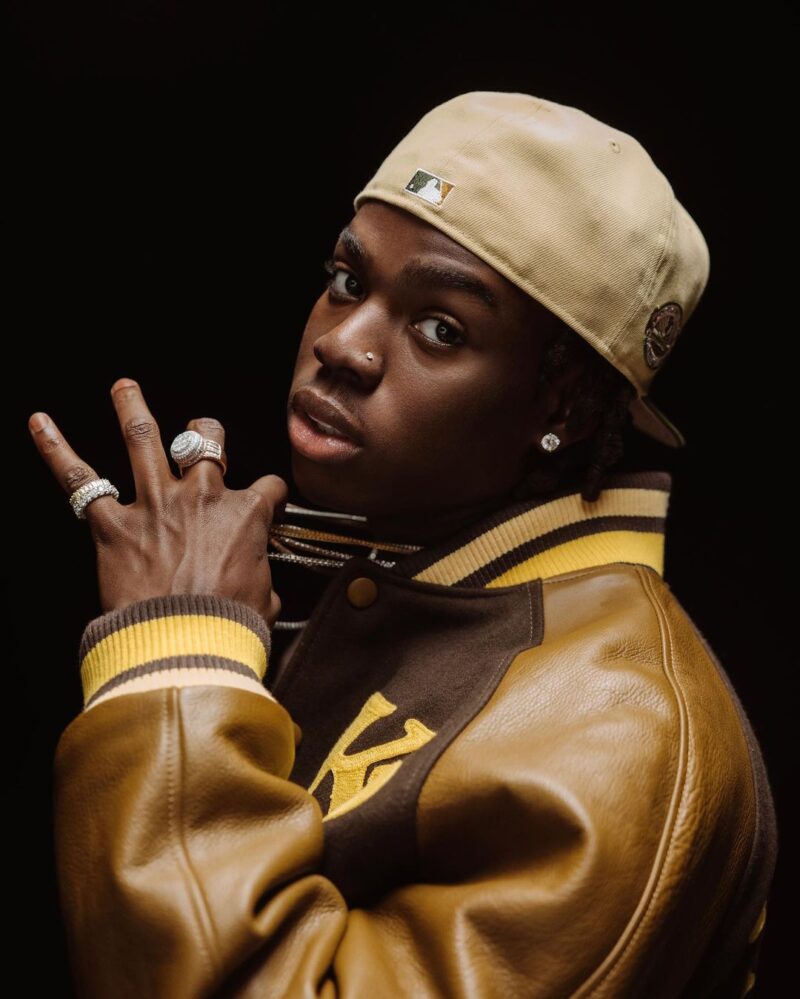
Tobe Nwigwe has built a career around making music on his own terms. Across a catalogue that includes The Originals, The Pandemic Project, moMINTs, and The Don’t Drop the Dime, he has developed a sound and visual language rooted in Houston, shaped by his Nigerian heritage, and unmistakably his own.
That distinct approach earned him a 2023 Grammy nomination for Best New Artist—recognition for an artist who says he began making music because he couldn’t find enough of the kind he wanted to hear.
With his latest body of work, ‘The Bridge‘, Nwigwe brings that long-running exploration into sharper focus. The project draws on his experience as a first-generation Nigerian American, pairing sounds and collaborators from across the diaspora with the perspective of someone shaped by both Nigerian life at home and Houston beyond it.
In our conversation for Upper Ent, he reflects on the project’s gradual evolution, the personal relationships behind its collaborations, and why bringing his family to Nigeria to film the visuals was essential to telling its story.
Upper Ent: The Bridge sounds like a meeting point for influences, artists, and experiences from both sides of the Atlantic. When did the idea for the project come together, and why did now feel like the right time to release it?
Tobe Nwigwe: I feel like it’s been coming together over the course of all the years I’ve been doing music. It’s been an evolution, and I’ve tried to curate this sound little by little.
It all came together through a series of connections, including meeting my brother Kizzo through Rob, Pharrell’s former manager. I don’t believe in coincidence, but the circumstances brought me together with someone who could help produce the sound and vision I’d had in my head for years.
I grew up in Houston, and I’m a first-generation Nigerian American. With Afrobeats having its place at the top right now—and having been influential for a long time—it felt right to reintroduce that sound from my own point of view.
Upper Ent: The project brings together artists including Odumodublvck, The Cavemen, and others. Were those collaborations spontaneous, or did you have particular people in mind?
Tobe Nwigwe: They were all very intentional. None of them were random; they came through personal relationships. I remember meeting Odumodublvck in Nigeria, at a celebration for my 2023 Best New Artist nomination. When I met him, I thought, “If I were here, if I grew up in Nigeria, I’d be Odumodublvck.” We have the same name, so there was an instant connection.
I met Flavour at that same celebration. He came out to support me, and it was a beautiful experience. I also met Seun Kuti, and we still have to do something together.
From Malice to Sia, J. Electronica, and The Cavemen—with their commitment to traditional highlife—these artists have inspired me. It’s an honor and a privilege to collaborate with them and to have personal relationships with them. Malice recorded his verse a couple of days after he won a Grammy. I called him at the Grammys, and he said he’d do it—and that it was an honor. He told me he’d been following us for a long time.
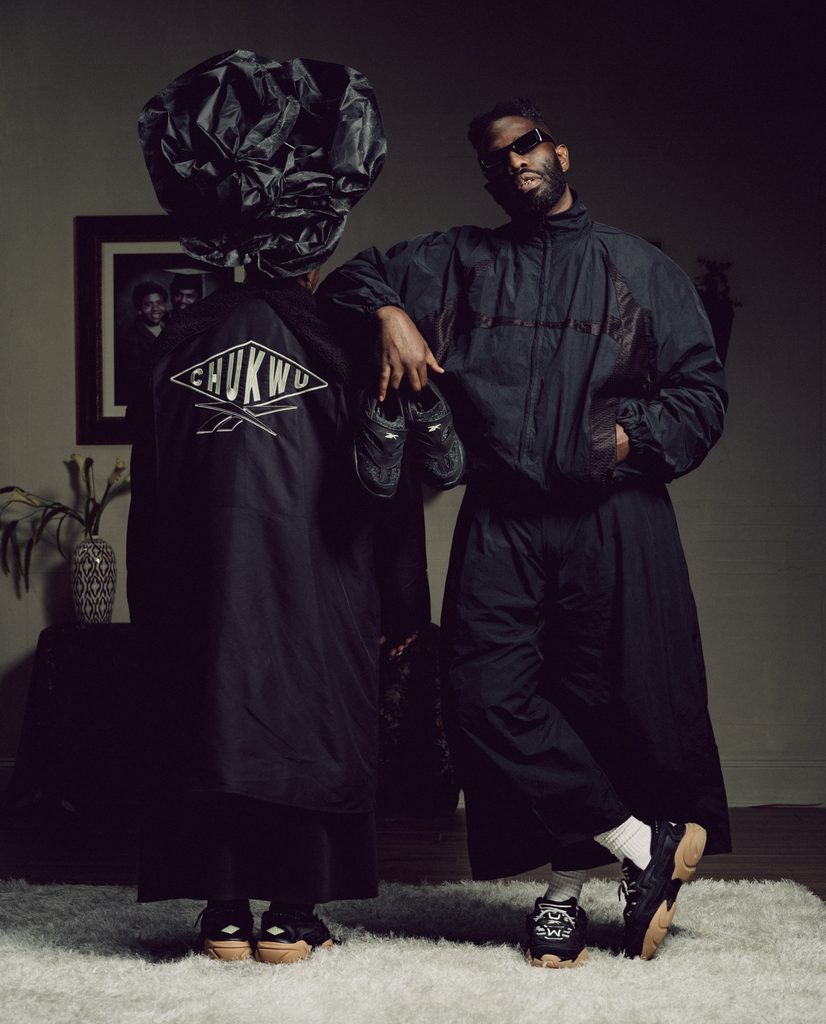
Upper Ent: Your visuals are just as considered as the music—from the outfits to the storytelling. Did you have a visual world in mind before the music came together, or did the songs shape the visuals?
Tobe Nwigwe: I had a vision in my mind. It’s crazy, because I could see the visuals as we were curating the music. We’d be in Kizzo’s home studio making the songs, and I could see how the visuals were coming together.
I think that comes from having to create songs and visuals within the same week for so long. My mind just works that way, even though I have more time now to put the visuals together.
Upper Ent: The title The Bridge carries meaning, particularly given your Nigerian roots and your upbringing in Houston. What does building that bridge mean to you beyond the music?
Tobe Nwigwe: For me, it’s the literal manifestation of what true unity can look like. It’s about not allowing yourself to be confined to just one part of yourself.
Everything you experience in life makes you uniquely who you are. No two people have the exact same experience, even though we can share similar ones. My parents were born in Nigeria, so I had a full Nigerian experience at home. When I went outside, I encountered a different culture in southwest Houston. I didn’t have many people from my parents’ hometowns around me at school, so I was shaped by two distinct cultures—and
both have been extremely beneficial in my life.
Upper Ent: There’s been more conversation in recent years about African artists and diaspora artists working together. After making a project that leans into that connection, what do you think still needs to be figured out about making those collaborations work beyond the music?
Tobe Nwigwe: It’s about truly combining and accepting both cultures in their totality—creating a subculture of connection where both are represented.
I saw something online about “third culture.” I don’t know exactly what that means, but I could see how being shaped by two distinct cultures could create a third culture, or a subgenre of both. That’s beautiful to me. It’s a different experience and an evolution of the human experience in the diaspora
Upper Ent: You’ve built your career on doing things your own way, from your music to how you present it. With so much of the industry driven by trends and quick wins, how difficult has it been to stay on your own terms?
Tobe Nwigwe: It hasn’t been difficult at all. By the grace of God, I knew who I was before I started making music. I started later, so I’ve always wanted to say something when I had something to say. I don’t want to do what everybody else is doing; I want to create something that doesn’t already exist in the marketplace.
I started making music because I felt there was a void in the music space for the kind of music I wanted to hear. So I started making it myself.
Upper Ent: How important was it for Nigerian culture to be central to The Bridge, rather than simply appearing along the way?
Tobe Nwigwe: It was so important that I brought my entire family to Nigeria to shoot most of the visuals. I brought my wife and five children in the middle of the summer—not during December—to experience it with me.
I could have shot the visuals in the U.S., but I wanted to make sure I went to Nigeria and filmed them there. I wanted the visuals to reflect the essence of what the music represents.
Upper Ent: Now that the project is out, what are you hoping to build or explore next?
Tobe Nwigwe: We still have a lot of visuals coming out, so the process is far from over. We’ll be doing a deluxe version and The Bridge Part Two. There’s also a show and a tour planned for next year. We have to perform these songs live on Nigerian soil.
Upper Ent: I’ll have to get an invite.
Tobe Nwigwe: You have to. It’s a must.