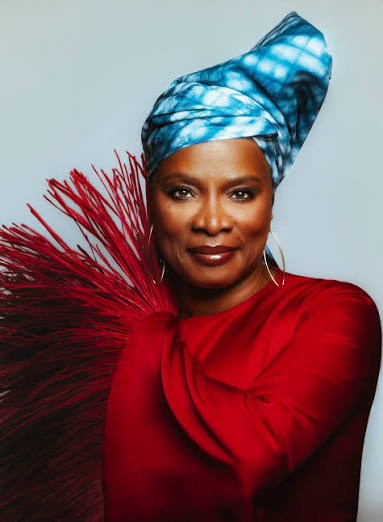
Interview: Eri Ife Is Crossing the Rubicon with Faith, Flavor, and Sound

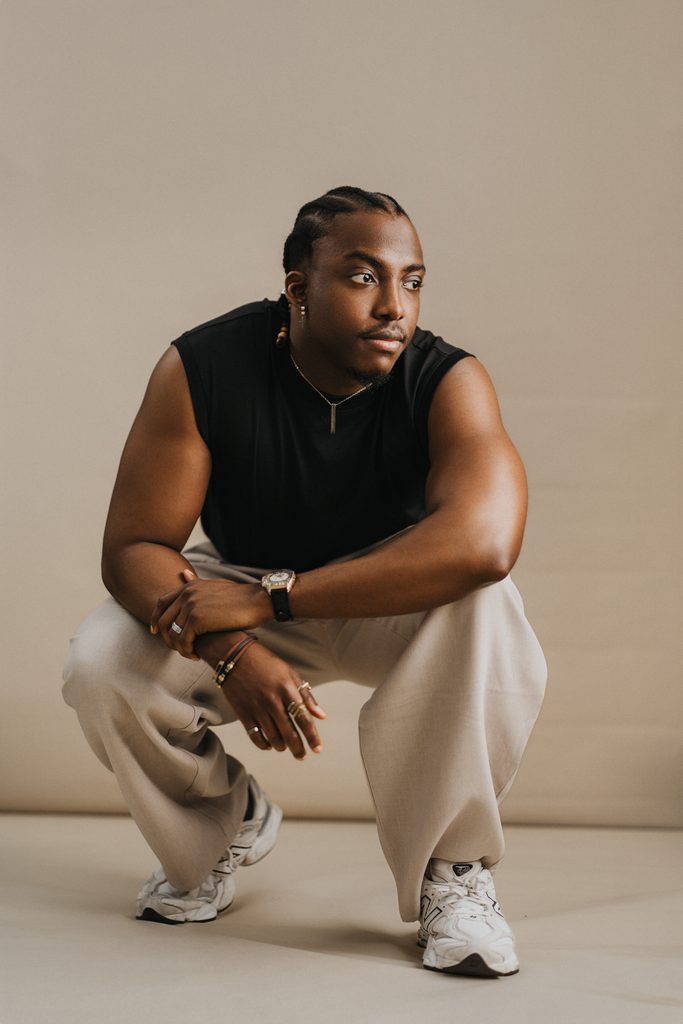
In a soundscape where Afrobeats, spirituality, and culture constantly collide, Emmanuel Akin-Onigbinde—better known as Eri Ife—is quietly carving out his own lane. His music sits at the crossroads of deep conviction, intentional artistry, and unmistakable African flavor, all while refusing to fit neatly into the “conventional gospel” box.

In this interview, Upper speaks with Eri Ife about his journey from hesitating to making “gospel music” to fully embracing faith in his sound, the jollof-inspired story behind his single “Aroma,” and why his latest five track  EP Rubicon marks a point of no return in his life and calling.

Upper: You mentioned that your music and life have evolved over the last 9–10 years, especially in how your faith shows up in your songs. Can you walk us through that evolution and how it’s affected your reach as an artist?

Eri Ife: Over the past 9–10 years, my life experiences have expanded significantly, and that naturally started to show up in my music. Between 2017 and 2021, my faith was not very prominent in my songs. People who knew me personally knew where I stood, but if you only knew me through my music, you might not have picked up on that.

What’s interesting is that when my faith started to show up more clearly in my music, that’s when more people began to discover me. It’s a pattern I’ve noticed: as my sound and expression became more aligned with my convictions, my music found its people more solidly. So it’s a mix—my music evolved in quality and direction, but I also think it’s now truly finding the audience it was meant for.


Upper: Listening through your catalogue, there’s a clear resistance to what people would call “conventional church music.” Have you ever had people question whether your music is “gospel enough”? How do you respond to that without compromising your art?

Eri Ife: That’s a very interesting question. Originally, before I started deliberately showing my faith in my music—from around 2017 to 2021, I actually resisted making gospel music. My thinking was, “If I’m going to do gospel music, then I might as well just sing in church and leave it at that.” I didn’t want to be boxed in.

What’s funny is that a lot of the conversations I now see online, especially from around 2023 till now—about what gospel music should or shouldn’t be are conversations I had privately with myself for years.

By the time I started making what you’d call gospel/Christian music deliberately, artists like Limoblaze, Anendlessocean, Gaise Baba, Grace Tena (Manta), Simi Drey, and others had already done a lot of groundwork. As far as I can tell, they were the forerunners of Afro-gospel and non-conventional gospel in Nigeria. Because of them, I didn’t face as much resistance as I might’ve if I’d started this journey earlier.

A recent example: I ministered at RCCG City of God in Glasgow. The demographic there is relatively mixed—young people and an older audience. I have braids, beads in my hair, earrings, rings—the whole look. You might expect skepticism, but the reaction was the opposite. What I kept hearing was, “I want my child who likes to braid their hair, who likes rings, to see you and know it’s possible to look like they want and still love Jesus.” That’s been a recurring and encouraging response over the last two or three years. So honestly, I haven’t faced as much resistance as people might assume. If anything, I’ve experienced a surprising amount of acceptance.


Upper: Personally, I find artists like you and Anendlessocean encouraging, especially in how you lean into a higher purpose with your art. Has that sense of calling become clearer as your faith became more central to your music?

Eri Ife: Definitely. There’s a sense of providence to it, like a genuine calling. When I started answering that call more fully, letting my faith be visible in my music, things began to shift. People resonated more, and I could see how God was using the music beyond what I originally imagined. I’m also encouraged that it inspires other artists, like you mentioned, to think about using their gifts for a higher calling. That, to me, is a big confirmation that this is more than just “content creation”.

Upper: Let’s talk about your latest single, “Aroma.” Can you give more insight into what the song is about and how it came to life?

Eri Ife: Aroma has a very vivid backstory. My church has this monthly house fellowship-style meeting called “Meet and Pray.” After the fellowship part, we usually have games, food, and just hang out. One of those evenings, we’d just finished the fellowship and moved into the games and food section. I sat in one corner, listening to an instrumental a producer friend had sent me, because I’d been itching to write new music. Then, suddenly, the smell of jollof rice hit me, proper smoky, party jollof. It was crazy.

At that moment, that jollof became the only thing on my mind. Nothing else in the room mattered as much as getting some of that rice. My mind immediately made a connection: this intense desire and focus, this is how it should feel to pursue God’s presence.

So I thought, “Let me write a song about that kind of hunger for God”—wanting His aroma to permeate every part of my life. I linked it to stories like Peter walking on water and the three Hebrew boys in the furnace. In both stories, everything around them is chaotic, but once their eyes are fixed on God, nothing else matters. For the Hebrew boys, even if God didn’t save them, they were still not going to bow. That’s the core idea of Aroma: when everything else falls away and it’s just you and God, His presence becomes the only thing that truly matters.


Upper: Your forthcoming EP is titled Rubicon, and “Aroma” is part of it. People love to talk about “eras” and “seasons” in an artist’s journey. What era does Rubicon represent for you? What are you giving back to the world with this project?

Eri Ife: It’s so interesting how this question is framed, because it captures exactly what’s happening. Rubicon is very much tied to a new era for me, literally and spiritually.

If you know the expression “to cross the Rubicon,” it means crossing a point of no return—a decision after which you can’t go back. Right now, I’m about to step into a new phase of my life, and I’ve either just made or am in the process of making a decision that feels exactly like that: a Rubicon moment.

There’s some detail I’m not able to fully share yet. By God’s grace, in a few months after the EP is released, I’ll be in a place where I can tell the full story. But what I can say now is that Rubicon feels like God’s reassurance to me in this season.

When I listen to songs like “Rubicon,” “Ebenezer,” and “KSMD” from the EP, I find comfort and confidence about where I’m heading. It’s like God used the music to speak back to me about the coming season.

The wild part is that when the title Rubicon came to me, I had no idea what lay ahead. I wrote it down around August 27, 2025. A year later, I realized just how prophetic that title was. So this EP is my way of marking that transition—a sonic monument to a point of no return—and offering that faith-filled courage back to the world.


Upper: Afrobeats as a culture has become increasingly comfortable borrowing from faith and spirituality—sometimes just as an aesthetic. As someone whose music is rooted in conviction rather than imagery, how do you navigate that overlap?

Eri Ife: I don’t think conviction and imagery are mutually exclusive. For me, conviction has to be the foundation, the wellspring from which everything else flows, including imagery, branding, visuals, and all of that.

So it’s not “conviction or imagery”; it’s imagery that flows from conviction. Depending on what God asks of a person in a particular season, that can look different. For some, it might mean a very business-minded approach, Intentional branding, strategic positioning, deliberate aesthetics. For others, it’s like a John the Baptist approach: “Just go. Don’t overthink your image; I (God) will orchestrate it.”

For me personally, I’m taking it as it comes. I recognize the place of branding and how my persona is presented, and I thank God I have a management team that pays attention to that.

But my non-negotiable, my baseline, is obedience and fellowship with God. There is no music, no ministry, no real motion without that. I can be on stage, everything looks great externally, but internally I’m wrestling with a slip-up from three days ago and begging God for mercy. That inner alignment matters more to me than any aesthetic.

Once my standing with God is right—once I know I’m in step with Him—everything else can be “added unto” me, including branding and perception. So I’m not worried about trends or imagery as long as the conviction is intact.


Upper: You’ve managed to stay independent of trends without sounding disconnected from contemporary music. Would you say that’s discipline, confidence, or just a refusal to chase validation?

Eri Ife: Honestly, it’s partly because I no sabi chase trends (laughs).. Every time I’ve tried to, it just hasn’t worked out. When I first started making music, I once tried to do a straight-up Afrobeat song. It was, to put it mildly, one of the worst songs I’ve ever heard in my life.

Today, I can make an Afrobeat song, but the difference is that now it’s organically me—it’s inspired by God and carries my own flavor. I’m not copy-pasting someone else’s template.

I also try to make music I would personally listen to. I don’t really follow charts. I don’t know what’s on the Top 100 most of the time. Every now and then my listening overlaps with what’s trending, but that’s rare. For example, there’s that Fola x Kizz Daniel record, “Baby Mijo, Janu Mijo”—the first time I heard it, I played it like 600,000 times. The music was just incredible. But generally, I’m not living inside the trend cycle.

Because of that, I don’t feel any real pressure to replicate what’s going on in mainstream charts. If you listen to my music, you’re more likely to hear influences from Jonathan McReynolds, Mali Music, Housefires/House Church Collective, John Bellion, and of course artists like Anendlessocean and Grace Mena.

So it’s a mix of authentic taste, failed attempts at trend-chasing, and a genuine lack of appetite for making music purely for validation. It’s just not my vibe.


Upper: Hypothetically, if someone put one of your songs—say “Aroma”—on a mainstream Afrobeat playlist instead of a gospel playlist, would you see that as your music finding the wrong audience or the right one?

Eri Ife: I don’t think I’d feel strongly either way. At the end of the day, the assignment is “Go ye into all the world.”

From a purely musical standpoint, if the sonics of the track fit an Afrobeat playlist, that’s fine. Let them be dancing and vibing, and then suddenly they hear:

“Walk me through your fires, Lord, you have me dancing in the flames…”

Beautiful. After the dancing, let conviction enter. Let them kneel down and pray if that’s what the Spirit is doing.


I don’t see that as the “wrong audience.” When I wasn’t taking my faith seriously, I stumbled on faith-based music from artists like Mali Music and Jonathan McReynolds, and those songs planted seeds in me that I only fully appreciated later.

So if my song ends up in a secular Afrobeat playlist, I’ll take it as God using it to plant seeds. It might not be the track that directly leads to someone’s full-on conversion, but it could be one of the moments God uses to start a conversation in their heart.


Upper: When listeners describe your music as peaceful or healing—maybe telling you it got them through something—do you take that as a compliment to your songwriting craft, or as evidence that something beyond your control is happening through the music?

Eri Ife: It’s definitely evidence of something beyond my control. Of course, I value the craft—songwriting, arranging, vocal delivery. I work on those things. But when someone tells me, “Your song helped me through a very dark period,” I know that’s not just me.

I’m very aware of my own insufficiency. So when I hear that kind of feedback, I see it as a sign that God breathed on the music—that He took what I offered and did something with it I could never have orchestrated on my own.

So yes, it’s encouraging as a songwriter, but more than anything, it’s a reminder that this is ministry, and that God in His mercy is using these songs to heal, comfort, and draw people closer to Him.

Share this post?

Join Our Community

Do you want to promote your music or brand? We’ve got you covered at The Upper Entertainment

Subscribe To Our Newsletter

Get updates directly to your inbox

Related Posts