For Nigerian-Australian singer, songwriter, and topliner Tabi Gazele, music has gradually become more than performance; it has evolved into a language for transformation, identity, and emotional honesty. From reaching the finals of BBC1’s All Together Now to performing across spaces like Henley Festival, Dubai World Expo, and Sofar Sounds, her journey reflects an artist quietly building a global presence through sincerity rather than spectacle.
Backed by support from BBC Introducing, PRS’s Women Make Music Fund, and Help Musicians, Tabi’s artistry continues to expand beyond borders. Her 2025 debut album Metamorphosis captures that evolution, a body of work shaped by vulnerability, growth, and lived experience. Outside music, she also leads Butterfly Future, a social enterprise rooted in empowerment and impact, further reflecting the intentionality behind her creative path.
As she prepares for upcoming headline shows at The Yard and Band On The Wall Manchester, Tabi Gazele stands at an interesting intersection of artistry and purpose, navigating both with remarkable clarity. In this interview with UpperEnt’s Hope Bassey, she speaks about her creative evolution, the emotional layers behind Metamorphosis, balancing music with social impact, and the experiences shaping her voice today.
Hope: Why music? How did your journey begin?
Tabi Gazele: Music was always present in my life because I was born into a very musical family. I’m the youngest of four, and my father was a self-taught musician, so our home constantly revolved around music. We played instruments together, rehearsed, performed in church, and occasionally around the city as well.For me, music first felt like connection before it felt like ambition.
I remember following my siblings everywhere, wanting to be part of whatever they were doing creatively. I didn’t fully understand my own abilities yet, but I always wanted to be close to the stage, sometimes I was literally just holding onto my father’s leg while everyone performed. My older sister especially inspired me. She was an incredible singer, and I admired how effortlessly she could sing. At the time, I couldn’t do any of the riffs or vocal runs she could, and instead of discouraging me, it pushed me to work harder and develop my own voice. Later, seeing my brother pursue music professionally also gave me confidence to take it seriously myself.
I was originally studying business, but eventually I made the decision to switch to music. My parents weren’t particularly happy about it at first, but deep down I felt it was something I was meant to pursue.
Hope: What kind of music shaped you growing up?
Tabi Gazele: A lot of the music in our home was Christian music. Secular music wasn’t necessarily forbidden, but gospel and faith-based music were definitely more prominent while I was growing up. At the same time, being raised in Australia exposed me to a wide range of sounds. There was rock music, R&B, South African music, and artists like Whitney Houston and Michael Jackson, who were huge influences on me early on.
As I got older, I found myself deeply connected to neo-soul artists like Jill Scott, Angie Stone, and John Legend. That was probably the moment music became more emotional and personal for me. Soul music felt less focused on technical perfection and more focused on honesty, feeling, and expression. That was when I realised the kind of artist I wanted to become.
Hope: How would you describe your sound today?
Tabi Gazele: I don’t think my sound fits neatly into one genre. At its core, I would describe it as soulful, but it’s also very eclectic. What matters most to me is emotional depth. As long as the music carries soulfulness and sincerity, I’m comfortable exploring different sounds and styles. The genre can shift, but the emotional centre of the music always stays the same.
Hope: What does your creative process usually look like?
Tabi Gazele: I’m very inspired by the human experience. I pay attention to people, the way they speak, the emotions they carry, the things they leave unsaid. Sometimes a single sentence or even the way someone expresses something can spark an entire idea for a song.
A lot of my writing revolves around identity, relationships, growth, and reflection. I also need a certain level of stillness to create properly. Nature helps me with that. Whenever I disconnect from noise and distractions, melodies and lyrics tend to come more naturally.
I’m always recording voice notes because inspiration can appear unexpectedly, and I’ve learnt not to ignore those moments.
Hope: What do you hope listeners take away from your music?
Tabi Gazele: More than anything, I want people to feel something real. Whether it’s joy, reflection, healing, questioning, or even a spiritual connection, I want the music to create some kind of emotional shift.
For me, music is deeply spiritual because it connects the heart, the mind, and the soul all at once. That’s also why live performance means so much to me. I want people to leave with an experience that feels personal to them, not just a memory of me as an artist.
Hope: You also run your own brand, Butterfly Future. What has that experience been like?
Tabi Gazele: It’s been incredibly fulfilling. Butterfly Future started as an idea rooted in wellbeing and empowerment, but over time, it’s grown into something that genuinely impacts people’s lives.The most rewarding part is seeing individuals leave our programs feeling more hopeful, more confident, and better equipped to make positive choices for themselves. Even though it initially started within the music space, it has naturally expanded beyond that because human experiences are interconnected.
Of course, building something from the ground up comes with challenges. Resources are always limited, and there are moments of uncertainty and rejection that can be difficult. But seeing the impact it has on people makes the journey worthwhile.
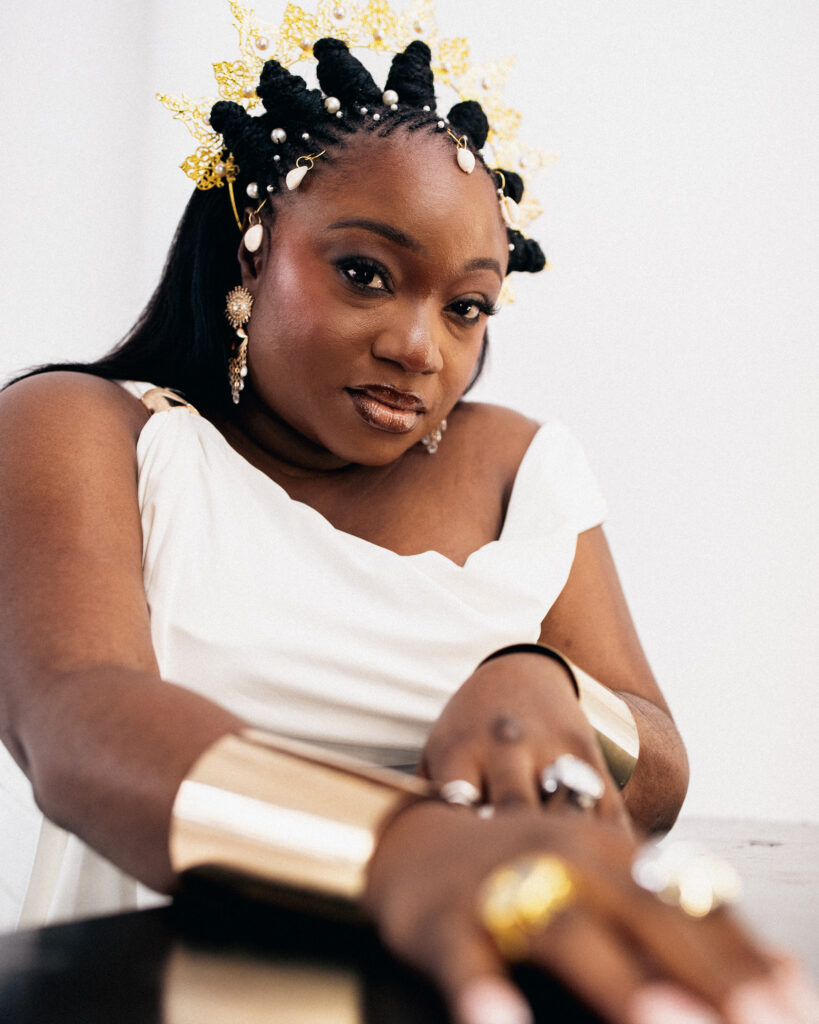
Hope: Your debut album Metamorphosis feels very personal and reflective. What was the process of creating the project like for you?
Tabi Gazele: Metamorphosis really came from a season of growth and transformation in my life. A lot was changing internally, the way I saw myself, the way I approached relationships, even the way I understood purpose and healing.Creating the album felt almost therapeutic at times because I was writing from very honest places emotionally. Some songs came quite naturally, while others took longer because I had to sit with certain feelings before I could express them properly.
I also didn’t want the project to feel rushed or overly polished in a way that removed its humanity. I wanted it to feel lived-in and sincere. That’s why the album carries different emotional textures, vulnerability, hope, reflection, softness, and even uncertainty. It mirrors the process of becoming.
Hope: Why was Metamorphosis the right title for the album?
Tabi Gazele: Because that word perfectly captured what the project represented for me.Transformation is rarely comfortable. People often talk about growth like it’s beautiful all the time, but sometimes it’s painful, confusing, and isolating. The album reflects those transitions, emotionally, spiritually, and creatively.I felt like I was shedding older versions of myself while learning to embrace who I was becoming. So Metamorphosis wasn’t just a title for the music; it was also a description of my real-life experience while creating it.
Hope: Was there a particular song on the album that challenged you emotionally while making it?
Tabi Gazele: Definitely. There were songs that forced me to confront emotions I probably would have preferred to avoid. Sometimes when you’re writing honestly, you can’t hide from yourself.There were moments where I had to pause recording because certain lyrics felt too personal or too exposing. But I also think those songs became some of the most meaningful because they came from a genuine place.I’ve realised that vulnerability in music can be uncomfortable, but it’s also what allows people to truly connect with what you’re saying.
Hope: Sonically, the album moves across different influences while still feeling cohesive. How intentional was that balance?
Tabi Gazele: It was very intentional. I’ve always listened to a wide range of music, so I never wanted to box myself into one specific sound. At the same time, I still wanted the album to feel emotionally connected from beginning to end. For me, the cohesion doesn’t necessarily come from genre, it comes from feeling. As long as the emotional core remains honest and soulful, different sounds can still exist within the same world.
That balance was important because Metamorphosis itself is about evolution, and evolution naturally involves movement and change.
I’ve had to redefine what success means to me. The music industry can make you focus heavily on visibility, numbers, and external validation, and for a while it’s easy to believe those things are the ultimate goal. But over time, I realised that recognition alone doesn’t automatically bring fulfilment.
Tabi Gazele-2026
I had to ask myself whether I truly wanted fame or whether I wanted impact. That shift in perspective changed a lot for me creatively and personally. Now, I’m more interested in creating meaningful connections with people than simply chasing visibility.
Hope: Now that the album is out in the world, what has it been like seeing listeners connect with it?
Tabi Gazele: That has probably been the most rewarding part of the entire experience. Whenever someone tells me a song made them feel seen, helped them process something emotionally, or reminded them they weren’t alone, it means a lot to me because that’s always been the deeper intention behind my music.
I think sometimes people underestimate how powerful it is to feel understood through art. So hearing those kinds of responses reminds me why I started making music in the first place.
Hope: What is one thing you’ve had to learn about yourself through this journey?
Tabi Gazele: I’ve had to redefine what success means to me. The music industry can make you focus heavily on visibility, numbers, and external validation, and for a while it’s easy to believe those things are the ultimate goal. But over time, I realised that recognition alone doesn’t automatically bring fulfilment.
I had to ask myself whether I truly wanted fame or whether I wanted impact. That shift in perspective changed a lot for me creatively and personally. Now, I’m more interested in creating meaningful connections with people than simply chasing visibility.