
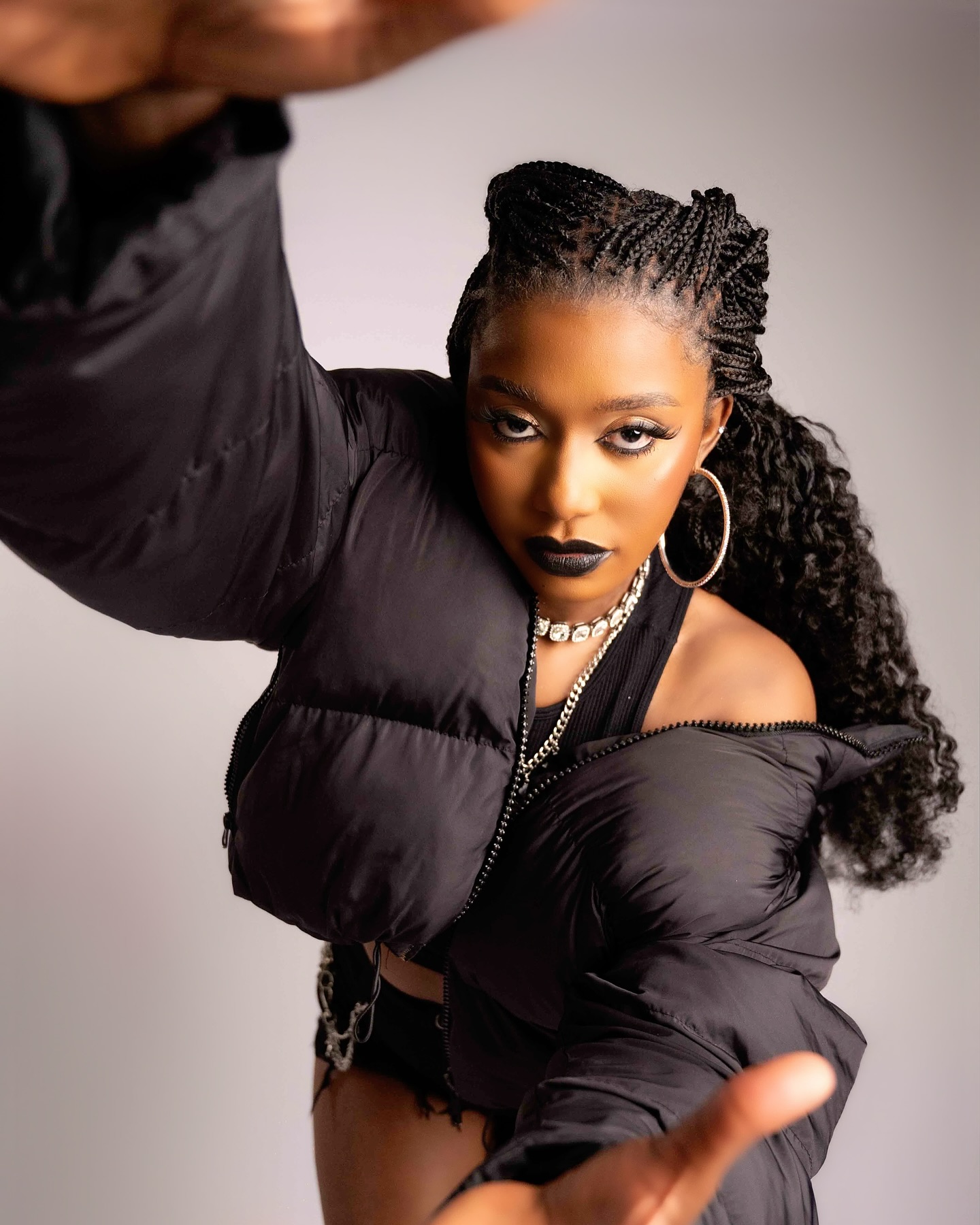
From the bustling streets of Sierra Leone to the quieter suburbs of Maryland, rising artist Deblyn is crafting a sound that refuses to sit neatly in any one box. Rooted in a country with over 26 dialects and a rich tapestry of tribes, her music carries the weight of home in every bar—whether through the Krio she insists on threading into each record or the stories and slang that could only come from “Salon.
Now navigating life in the diaspora, she stands at a compelling crossroads: determined to remain unmistakably Sierra Leonean while speaking to a global audience that often prefers the familiar over the truly new.
In this conversation with Anifowose Sijibomi, Deblyn opens up about the responsibility of being an independent, self-funded artist, the quiet grief and courage that followed the loss of her father, and the pressure of coming from a deeply religious background while choosing a public, unconventional path.
She reflects on her evolution from hard-edged lyricist to self-professed “lover girl,” her admiration for Afrobeats heavyweights like Tiwa Savage, Yemi Alade, Tems, and Ayra Starr, and why she calls herself a “gangster in a dress.” The result is a portrait of an artist intent on doing things on her own terms—visually, sonically, and spiritually—even if it means taking the longer road.
You grew up in Sierra Leone before moving to the United States. Both environments clearly shape your musical identity. What parts of Sierra Leone do you hear most strongly in the artist you’re becoming?
Deblyn: Honestly, every part of it. I grew up there my whole life and the culture is so rich. We have about 26 different dialects in Sierra Leone, and all these people act and behave differently. I’m Loko by tribe. If you ask about Loko people, they’ll tell you we’re very peaceful. I also grew up in different parts of the country, so I had to learn to live with different groups of people, to assimilate and learn from them.
Because of that, every song I make has a different type of Sierra Leonean vibe. People from that specific culture or tribe will catch those details the most. But all my songs have Krio in them—Krio is the local dialect where I’m from—and I’ve never made a song that doesn’t have Krio or doesn’t mention Sierra Leone in some way. It’s a big part of my artistry and my musical journey. Without it, I wouldn’t have all these stories and slang. It would be a little boring.
Historically, Sierra Leonean artists have had to compete for attention in an African music industry dominated by bigger markets like Nigeria, Ghana, and South Africa. From your position in the diaspora, what do you think Sierra Leonean music needs to do differently to create its own international lens?
Deblyn: I think Sierra Leoneans need to focus less on competing with countries that are already successful and established. They’re big, they’re known, they’re doing their thing. We can definitely be inspired by them, but we need to use what we have and work on it—make it sound better, look better, make people want to hear it. When people hear something new, they get curious. They want to know more.
So I don’t think we should be focused on competition. We should be focused on learning, improving our sound, and getting inspired. Right now, I don’t think competing makes sense, and I’m just being honest.
Your sound moves between dancehall, Afrobeats, pop, and Krio fusion without staying in one box. Is that versatility intentional, or are you simply following wherever your creativity takes you?
Deblyn: It’s both. I’m very intentional about not putting myself in one box because I don’t think one genre can fully represent me. I grew up in different parts of Sierra Leone, I’ve lived in Guinea, and now I live in America. I listen to different types of music and get inspired by different people, so I can’t just be placed in one genre.
Sometimes in the studio I’m very deliberate—like, “Okay, this is the sound I want to create,” and I follow that process. But most times I’m like, “No, I can’t be boxed in. I’m going to make what I like, what I want to hear, music I’d want to play in the car.” I also want my people to know that Deblyn is not just one sound. I’m an artist with different backgrounds in a way. The versatility is definitely part of my identity, but it also comes naturally.
Who are some of your favorite Afrobeats artists?
Deblyn: I have a lot—too many. There are so many amazing women in this field. I literally grew up listening to Tiwa Savage, Simi, and Yemi Alade. I love Yemi’s voice; the way she sings just makes you feel something.
I love Ayra Starr’s music too. There’s this one girl I saw when I was in Nigeria about a year ago—Amaarae—I love her music. Tems, definitely. And of course I can’t forget the guys: Wizkid, Davido, Burna Boy… it’s a long list. All the greats.
Don Jazzy follows you and seems to support your journey. How did that relationship come about, and what does it mean for you?
Deblyn: He’s just a really cool person. I’ve known him from before things got serious with music, not like I blew up first and then met him. I can’t even fully remember how it started, but I know he’s amazing. He gives great advice and he’s a GOAT in the music industry. Before I even seriously started talking about my music, I already knew him. We’re just cool—nothing crazy. But of course it helps to have someone like that in your corner. He knows what he’s doing, so whatever he says, I’m listening and taking notes.
Your songs “Batty Girl” and “Dance” show two noticeably different sides of you, while “My Head” moves into a more vulnerable, romantic space. What are you discovering about yourself as you move from one release to the next?
Deblyn: A lot. When I started making music, my lyrics were very “tough.” Not exactly hip-hop or trap, but very strong, almost “violent” in attitude. People would say, “You don’t even look like you can fight—why do you sound like this?”
Over time, I’ve learned to feel comfortable being vulnerable. If you listen to my older songs, even the love songs, you’ll still hear me talking like I’m ready to fight or defend myself all the time. With “My Head,” I allowed a softer side of me to come out. Not a completely different person, but a slightly different version—more open, more emotional. It reminded me that I’m actually a lover girl in a way.
I want to make different sounds, talk about different things, and not sound the same every time. If you always hear the same energy from me, you’ll get bored. So that balance between the harder edge and the lover girl side is something I’m really exploring.
I still feel like I’m just getting started, so I have a long way to go. But being independent has taught me that being an artist is so much more than just making music.
Deblyn (2026).
You once joked that you’re a “gangster in a dress.” What does that phrase mean to you?
Deblyn: People look at me and think, “She looks like a lover girl,” and they’re right—but that’s not the whole story. There’s also a tougher side to me. When I say I’m a “gangster in a dress,” I mean I’m soft, feminine, and pretty, but I’m also strong and not someone you can walk over. It’s both sides existing together.
Do you have a team right now?
Deblyn: I wouldn’t say I have a full, official team. I have amazing people I’m working with, but nothing is fixed on paper. I have a few people I can call to ask, “How do I go about this?” and they’ll help. There are people who want to work with me, but I only want to work with people who truly have my best interests at heart.
I don’t just want a team for the sake of saying “I have a team.” I want people who actually want to be here, who want us to grow. I don’t want us to be in the same position every year. I need people who can really do the work and are not just here for vibes.
You started your journey as an independent, self-funded artist. What has building your career without a major label taught you about the business of being an artist?
Deblyn: I still feel like I’m just getting started, so I have a long way to go. But being independent has taught me that being an artist is so much more than just making music. Maybe if I’d started with a label, I wouldn’t understand what I know now. As a self-funded artist, I have to think about everything: budgets, marketing, visuals, distribution, promotion, and building a team. Every decision matters. Every dollar you spend has to be worth it.
I wasn’t always like that. I used to just go with the flow—if I wanted something, I got it. Now I’m constantly asking, “Is this worth it?” It’s changed my perspective on life and taught me responsibility. I’m way more responsible now.
It’s also very challenging, and people don’t talk about that enough. I value independent artists a lot more because I see the intentionality behind what they do. While you’re trying to make great music, you also have to think about how to fund it, market it, shoot visuals, all of that. And I like to be very hands-on, especially with visuals. I want to be involved, I want to have a say, I want to direct a little bit. It’s teaching me a lot.
You come from a very religious, Christian background and have spoken about losing your father. How did that experience push you to start recording music professionally?
Deblyn: I’ve always loved music and always wanted to do it. But when I lost my dad, it ignited something in me.
I kept thinking, “He never got to see this side of me.” I would’ve loved for him to see it. I always felt like I had time. And because of my family background—my dad’s side, my mom’s side, very Christian, very religious—I was trying to be the “good daughter.” I didn’t know how they’d handle it. I was scared.
Most of them still don’t even know I do music to this day. That really held me back. If it wasn’t for that fear, I would probably have started making music a long time ago.
But losing my dad made me realize how short life is. I just thought, “Everybody will be fine. I’m going to do it. When they find out, we’ll talk about it and move on. Nobody’s going to kill me.” I’ve always been a little shy, but I’m working on that. I’m doing it now—doing something I love.
There’s often pressure on African artists in the diaspora to make music that sounds immediately familiar to international audiences. How important is it for you to retain your Sierra Leonean elements, even if that makes the music less instantly “accessible”?
Deblyn: It’s very important. I want my music to travel and connect with people everywhere, but I don’t want to become predictable, like, “We know exactly what she’s going to do.”
I don’t want to lose value or become generic. I want to be unique. My Sierra Leonean identity is not a marketing strategy, it’s who I am. I’ll always be inspired by other artists, big or small. If you’re amazing, you’re amazing. But I know I bring a different side, my own vibe. I want to stay different, stay unique, and carry my culture into everything I do.
You’ve mentioned that you style yourself and handle your own look. How involved are you in your visual presentation?
Deblyn: Very involved. I style myself, I do my hair, I do my makeup—everything. Today I don’t have makeup on because I woke up tired, but usually I’m very hands-on with how I present myself. I like to look simple but still uniquely different. Eventually I’ll definitely work with a stylist, but it has to be someone who can work with my vision, not just dress me however they like. I want my visuals to reflect who I am.
Maybe I’m still styling myself partly because I’m on a budget—who knows? But I genuinely love doing it. It’s another creative outlet for me.
When new listeners see you on their feed for the first time, what do you hope their first impression of “Deblyn” will be?
Deblyn: I want them to feel like I’m bringing something fresh. I want them to see someone who’s confident, feminine, and strong at the same time—someone who represents where she’s from but also speaks to people everywhere.
If they see me and think, “Who is this girl? I want to know more,” then I’ve done my job.


![{"remix_data":[],"remix_entry_point":"challenges","source_tags":["local"],"origin":"unknown","total_draw_time":0,"total_draw_actions":0,"layers_used":0,"brushes_used":0,"photos_added":0,"total_editor_actions":{},"tools_used":{},"is_sticker":false,"edited_since_last_sticker_save":false,"containsFTESticker":false}](https://theupperent.com/wp-content/uploads/2026/10/26-10-19_02-15-30-590-scaled.jpg "26-10-19_02-15-30-590")