Artist development has become one of the music industry’s most overused phrases. It appears in press releases, conference panels, and agency bios with remarkable frequency, often reduced to release strategies, social media growth, or audience acquisition.
Yet, stripped of its buzzword appeal, artist development asks a more fundamental question: what does it actually take to build a career that outlives a viral moment? As the music business increasingly rewards speed, visibility, and constant output, artist development has become both one of the industry’s most valuable disciplines and one of its most misunderstood.
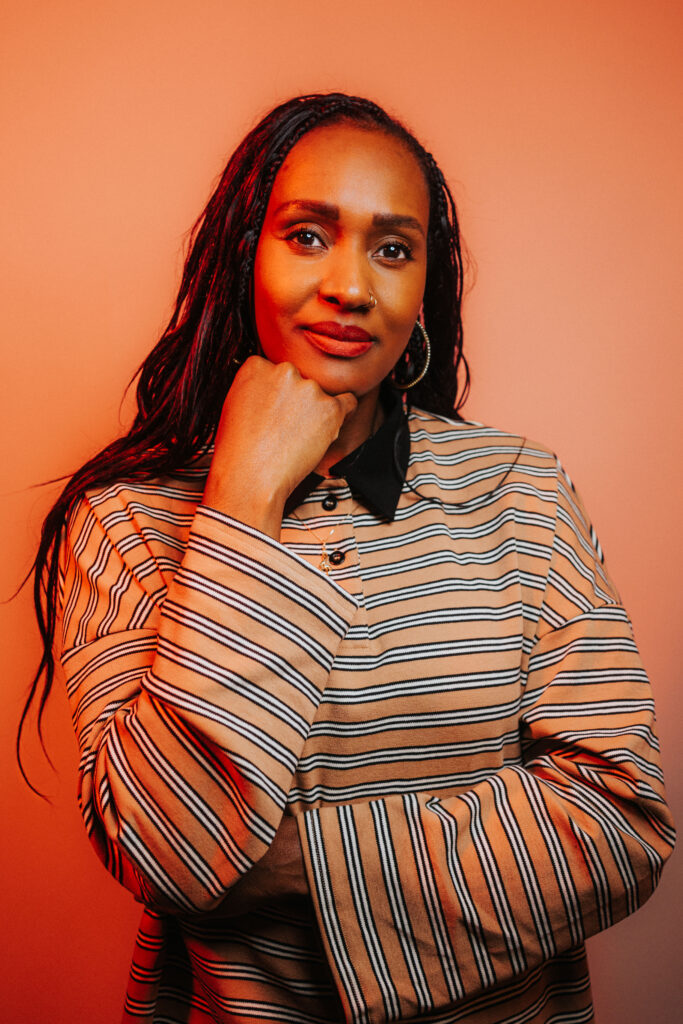
Few professionals have examined that question as closely as Tiéce Raeanne Edwards. Through Snap & Boom, the artist development consultancy she founded, Edwards works with emerging artists to bridge the gap between creativity and career sustainability. The organization supports musicians through artist development strategy, music business education, audience development, and professional consultancy, advocating an approach that extends well beyond marketing campaigns or release rollouts.
At a time when artists are increasingly expected to function as entrepreneurs, strategists, and business managers, Snap & Boom’s work is rooted in a simple premise: lasting careers are built as much on knowledge, infrastructure, and intentional development as they are on talent.
In this conversation with UpperEnt, Edwards discusses the changing nature of artist development, the opportunities and pressures of independence, the systems the global music industry must strengthen if creative careers are to endure, amidst other discuss.
UpperEnt: You’ve worked across live events, audience development, artist relations, and now artist development consulting. Looking back, what misconceptions do artists have about the relationship between building an audience and building a career?
Tiéce Raeanne Edwards: I like analogies, so here’s one that best answers your question.
Think of building a music career as an umbrella. The canopy is what people see, but it’s the many wires (or ribs) underneath that keep it standing and functioning. Too often, artists fail to recognise that audience development is one of those essential supports.
Instead, they treat it as part of the canopy itself, rather than as a distinct and vital component that gives their career structure and strength. As a result, they don’t separate it out, invest in it intentionally, or nurture it over time, even though it’s one of the key elements holding everything together. Therefore there are often a lot of blurred lines when it comes to the relationship between building an audience and building a career.
UpperEnt: The democratization of music distribution has allowed more artists to release music independently than ever before. Yet many independent artists seem overwhelmed by the demands of content creation, branding, marketing, and business management. Has independence genuinely empowered artists, or has it simply redistributed the industry’s workload onto them?
Tiéce Raeanne Edwards: The democratisation of music distribution has done both. On one hand, it has empowered artists by giving them greater creative control, direct access to audiences, and the ability to build sustainable careers without relying on traditional record labels. This has strengthened the independent music sector and created entry points that were previously seen as “gate-kept” to many artists.
On the other hand, this shift has led to an influx of artists releasing music, making the industry far more competitive. As a result, artists are increasingly expected not only to create music but also to manage content creation, branding, marketing, audience engagement, and the business side of their careers. So while artists have gained greater independence and access, they have also taken on a much heavier workload in an extremely competitive and fast-paced space.
UpperEnt: Having worked in markets as different as the UK, the UAE, and other international territories, what infrastructure challenge appears consistently across emerging music markets, regardless of geography?
Tiéce Raeanne Edwards: One challenge I’ve seen consistently across emerging music markets, regardless of the country, is the lack of an effective system for rights management and royalty collection. In a lot of territories, there simply isn’t a reliable way to collect royalties when music is played in public spaces, either because local CMOs, PROs or neighbouring rights organisations aren’t well established, or because licensing and enforcement aren’t happening consistently.
That also has a domino effect on artists. If they don’t see royalties being collected, they’re far less likely to register their music in the first place. It creates a cycle where a huge amount of revenue goes uncollected, and local artists miss out on income they’ve earned. From what I’ve seen, improving royalty infrastructure and educating artists on the value of registration would make a meaningful difference to the long-term growth of these music ecosystems.
UpperEnt: Through Snap & Boom, you’ve advocated for artist development as something much deeper than marketing. In your view, what has the modern music industry lost by treating artist development as a short-term promotional exercise rather than a long-term investment?
Tiéce Raeanne Edwards: In short, I believe we’ve sacrificed long-term careers and artistic growth for short-term wins and trends. As labels have increasingly stepped back from investing in artist development, much of that responsibility has shifted to artists themselves. Nowadays, to gain the attention of labels and major industry stakeholders, artists are often expected to develop on their own first.
From conversations I’ve had with labels and A&R representatives, it’s clear they’re looking for artists who already show signs of being developed. For them, that usually means a strong or rapidly growing online presence, impressive streaming numbers, and evidence of potential international interest. As a result, when artists think about development, they naturally focus on achieving those benchmarks, so marketing and online visibility become the primary goals.
For me, however, artist development runs much deeper than chasing virality or investing in expensive PR campaigns. It’s about investing in the person behind the music. It means understanding how an artist is wired, helping them build resilience and confidence, refining their craft both on and off the stage, developing creative clarity, and building a genuine connection with their audience so they can continue to grow as both artists and individuals.
UpperEnt: Many artists spend years perfecting their sound but very little time understanding contracts, rights management, publishing, or revenue streams. Why do you think business literacy remains one of the industry’s biggest blind spots?
Tiéce Raeanne Edwards: First, the music industry is constantly evolving, and keeping up with the business side can be overwhelming, especially for independent artists who are effectively running their own businesses. Even something like the way AI is changing contract language and rights negotiations is a lot to get your head around if your primary focus is creating music.
Secondly, for a long time, the industry model was that artists made the music while managers, labels and other members of the team handled the business. That’s changed significantly. More artists are realising that understanding contracts, publishing, rights management and revenue streams gives them more control over their careers and helps them recognise when a deal or partnership isn’t in their best interests, but there are still many who don’t have the business acumen that they probably need to “survive” the current climate.
That said, I don’t think business literacy is as much of a blind spot as it once was. There are far more resources, courses and conversations around the business of music than there used to be. The challenge now is that artists are expected to wear so many hats. They’re creating content, building audiences, marketing themselves, touring and managing their businesses, all at the same time. It’s understandable that many either don’t have the capacity to properly educate themselves or choose to hand that responsibility over to someone they trust. The problem is that if artists don’t have at least a basic understanding of the business, it’s much harder to know whether that trust is being well placed and whether they are making sensible decisions.
UpperEnt: Afrobeats has become one of the world’s most visible musical exports, but visibility does not always translate into sustainable ecosystems. From your perspective, what are the key ingredients that transform a successful genre movement into a mature music industry?
Tiéce Raeanne Edwards: The first ingredient is ensuring that the music ecosystems in the markets where the genre originates have strong foundations that allow artists to build sustainable, long-term careers, not just local success, but international ones. That starts with robust copyright and collection rights organisations, accurate metadata so artists and works are globally identifiable, and transparent royalty systems that ensure creators are paid fairly wherever their music is consumed.
The second ingredient is professional infrastructure. A mature industry needs experienced managers, publishers, lawyers, distributors, marketers, promoters, booking agents, and various professionals who can support artists at every stage of their careers and sustain momentum. Great music alone isn’t enough; it needs an ecosystem of experts who can open doors, create opportunities, and help artists compete across different markets.
The next ingredient is investment. Sustainable industries are built when there is capital available across the ecosystem, from talent development and live music infrastructure to independent labels, technology, and music businesses.
It’s important that investment doesn’t only go to breakout stars, but also to the wider community that enables a diverse range of artists and music entrepreneurs to succeed.
That naturally leads to the importance of a strong local market. Global success should complement, not replace, a healthy domestic industry. When artists can build viable careers through local touring, radio, streaming, festivals, brand partnerships, and engaged fan communities, they are less dependent on international validation and can negotiate from a position of strength. A thriving home market also creates opportunities for music tourism, attracting fans who want to experience the culture where the music was born.
Finally, it’s important that origin remains part of the conversation. As genres become global, creators and businesses from the originating markets should retain meaningful ownership of their intellectual property, their narratives, and their sonic identity.
The goal should be to use the global popularity of the genre to bring people into the local ecosystem while creating international collaborations that expand audiences without diluting the culture. We’re already seeing this with major West African artists collaborating with global stars
UpperEnt: Your work often emphasizes diversity, inclusion, and access. As conversations around representation become more mainstream, how can creative professionals distinguish between meaningful structural change and symbolic gestures?
Tiéce Raeanne Edwards: I think it’s becoming much easier to recognise the difference between symbolic gestures and genuine structural change. Audiences and communities are more aware now, and they can usually tell when diversity, inclusion, and access are being treated as a marketing exercise rather than embedded into the way an organisation actually works.
There is still a lot of sloppiness when it comes to representation, diversity, inclusion, and access. I recently became a mother, and that experience alone highlighted many of the ongoing barriers that parents and guardians—particularly women—continue to face in the music industry.
I attended an international conference that hosted a panel on parenthood and making the music industry more adaptable for parents. I brought my six-month-old baby because I was still on maternity leave and didn’t have childcare options (one of the many challenges).
The irony of the panel was impossible to ignore! Accessing the venue was a challenge: there were no lifts and the corridors were too narrow to navigate easily with a pushchair, so I had to carry it up flights of stairs. Then the discussion itself felt quite surface level, and the panel didn’t reflect the diversity of parents and guardians working in music. It left me feeling that the topic had been programmed because it was considered timely, rather than because the organisers had genuinely considered who the session was for or what barriers attendees might actually face. It was a reminder that representation isn’t just about putting a conversation on stage, it’s about designing the environment, the policies, and the experience around the people you’re trying to include.
On the other hand, I’ve also seen what meaningful change looks like. A few years ago, I challenged a festival about its heavily male-dominated lineup. Rather than becoming defensive, the bookers apologised, acknowledged the issue, and asked for feedback on how they could improve. I shared resources such as Keychange EU, and over the following years they consistently broadened the gender diversity of their programming. That wasn’t a one-off response to criticism, it became part of how they approached booking. To me, that’s what structural change looks like: listening, learning, changing systems, and maintaining that commitment over time.
UpperEnt: You’ve worked closely with live events and audience engagement. In an era increasingly dominated by streaming metrics and social media analytics, what aspects of audience connection do numbers fail to capture?
Tiéce Raeanne Edwards: I think data is incredibly valuable, but it only tells part of the story. Streaming numbers, follower counts and engagement rates can show you what is happening, but they don’t always tell you why it’s happening or how meaningful those connections really are. Some of the strongest artist-audience relationships I’ve seen have existed long before they were reflected in the numbers.
You see it when fans travel long distances to attend a show, introduce an artist’s music to their friends and family, or continue supporting them between release cycles. Those behaviours demonstrate trust and emotional investment, which are much harder to measure than streams or likes.
UpperEnt: If you were advising a talented African artist with limited resources but global ambitions, what would you prioritize during the first three years of their career, and what common mistakes would you urge them to avoid?
Tiéce Raeanne Edwards: Firstly, I would encourage them to invest time in understanding themselves as an artist before trying to appeal to the rest of the world. Developing a clear artistic identity, understanding their audience and refining their craft will create much stronger foundations than chasing every trend that appears online.
Secondly, I would prioritise business literacy from the very beginning. Understanding publishing, copyright, contracts, royalties and metadata may not seem exciting, but those are the things that protect careers over the long term.
You don’t need to become an expert overnight, but having a basic understanding will help you make better decisions as opportunities arise.
I’d also encourage artists to build meaningful relationships rather than simply trying to build networks. Sustainable careers are often shaped by trust, collaboration and consistency rather than transactional interactions.