The trajectory of modern Afro-fusion is often narrated through its triumphs, the viral dance challenges, the sold-out stadiums, and the intoxicating highs of “blowing.” But rarely do we stop to examine the emotional landscape of the artists behind the sound.
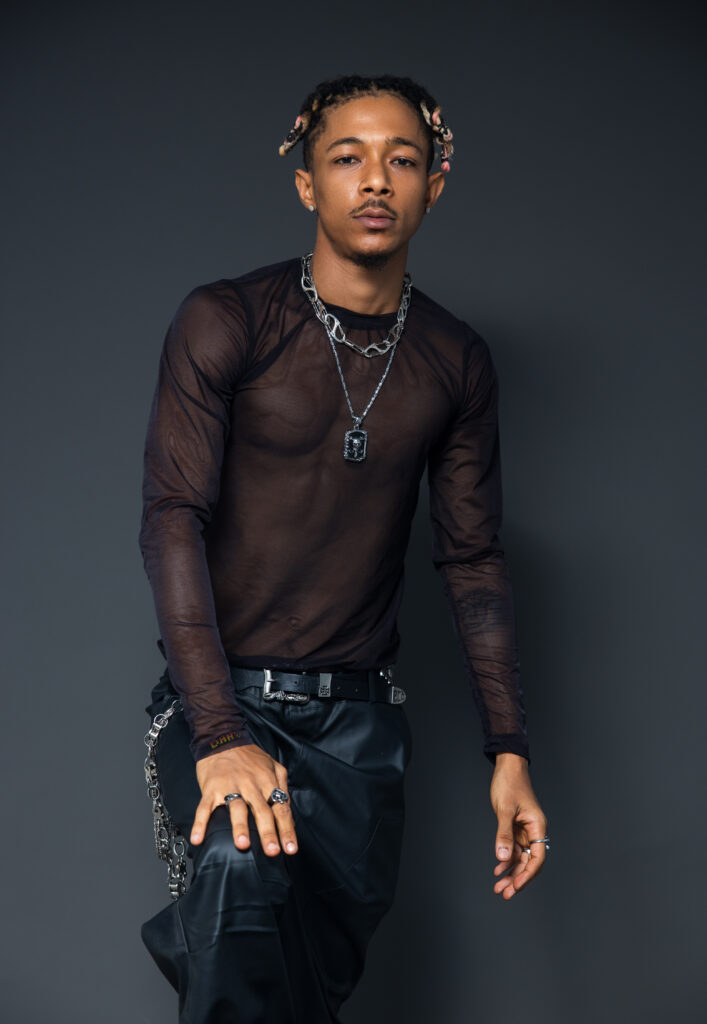
Enter Desmond Frank, known creatively as Dahvi (and occasionally his moniker, Dahvileon). A 2021 Theatre Arts and Film Studies graduate from the University of Port Harcourt, the Rivers State native is stepping back into the arena with his sophomore EP, Ready or Not.
Following his self-titled 2023 debut, this new body of work is less of a polite reintroduction and more of a sonic ultimatum. It explores the heavy friction of the modern Nigerian youth experience: the relentless pursuit of financial survival clashing against the fragile need for genuine human connection. In this written exchange, Dahvi shares the realities of his Port Harcourt upbringing, the painful real-life inspirations behind his most vulnerable tracks, and why he’s completely unfazed by industry gatekeepers.
Upper: Port Harcourt has a very distinct sonic DNA; it’s gritty, soulful, and unapologetically honest. How did growing up surrounded by both Western sounds and the urban realities of Rivers State shape the texture of your voice?
Dahvi: The unimaginable lifestyle I’ve witnessed in the streets of places I’ve lived taught me a lot about life, and also the direction in which I want to sound. Western music definitely played its role too in some of my choices of sounds; it’s truly a blend of calm and chaos.
Upper: You graduated with a degree in Theatre Arts and Film Studies in 2021. Music is inherently performative, but how does your background in theater influence how you structure an EP like Ready or Not as a narrative? Are you writing songs, or are you writing scenes?
Dahvi: I’m writing songs from just either how I feel at that time or my own experience I’d like to share. Some of the scenes in my head, you can say, are dramatic. Sometimes some are real; some are mere thoughts from my alter ego.
Upper: Your 2023 self-titled EP, DAHVILEON, introduced us to your sound. Now, with Ready or Not, the title feels like an ultimatum to the industry. What shifted in your psyche between 2023 and now that made you drop the polite introductions and demand the spotlight?
Dahvi: Cos why not? I put in so much time and effort into my craft and don’t think there’s anyone out there that deserves it any more than I do. Plus, I’ve not seen who’s doing it better than me, lol. Just a few I look up to, like Burna Boy.
Upper: “Patty Cake” is a children’s game, but you use it to describe how people treated your dreams as child’s play. Was there a specific moment in your journey where you realised people weren’t taking your vision seriously, and how did you channel that disrespect into hustle?
Dahvi: Oh, a lot of times. Plenty of times. Many people try to act like I’m not meant for this through subtle shades about my hustle or music. But I was built with a tough skin, so I just ignore the funny acts. I like to be underestimated, so we’ll see, lol.
Upper: Naming a romantic track after Samory Tourea, legendary West African ruler who resisted colonisation, is a heavy, powerful choice. Why did you choose to equate romantic devotion with historic, revolutionary strength? Also, what energy did Bella Shmurda bring to the studio that helped unlock this track?
Dahvi: Bella Shmurda is an amazing artist that I feel like the world needs to pay more attention to because his energy is clean and pure. He personally really loved the song and wanted to jump on it, and who am I to say no? Samory is a word that translates to a fighter. In Samory, I’m a fighter for love, the love I once had for someone who keeps taking it for granted.
Upper: In “Lonely,” you write about a brilliant paradox: having the money but missing the person you chased the money for. In the Nigerian music scene, we often celebrate the “blow” (success), but we rarely talk about the isolation that comes with it. Why was it important for you to show that vulnerability?
Dahvi: As I said, vulnerability is part of my music because I like to express my true, undiluted feelings in my sound. “Lonely” is just as the lyrics imply, a relationship I was in that didn’t end on a good note because, at the time, I wasn’t able to fund the relationship.
Upper: You mention navigating industry gatekeeping in the track ‘Peace of Mind’. for an emerging artist in Nigeria today, the barrier to entry can feel insurmountable. How do you protect your inner calm when the machinery of the industry demands constant noise and public validation?
Dahvi: I believe in God. Nothing is impossible for Him. It’s just going to take time because humans control the system, so I’m not panicking. My audience will find me, and things will align naturally.
Upper: On “Blow Empty”, you explore digital disconnect and unfulfilled presence—very modern relationship anxieties. Do you feel like our generation has lost the ability to love consistently because we are too distracted by the hustle?
Dahvi: The relationship scene in our generation is crazy, with problems of trust issues, lack of communication resulting in misunderstandings, and a lot of bickering. So the song Blow Empty is simply asking for clarity: What are we doing? What do you want from me—from this—so I don’t waste my time trying to be Mr. Right for the wrong one?
I make my music to be understood both by people in my locality and globally. So when I’m finally there, I just want people to look at me and realize that if I can do it, with everything I’ve been through in this world, then anyone with the right amount of anger can.
Davi- 2026
Upper: The manifestation track, “Dahvileon,” acts as a self-coronation. If Ready or Not is your statement to the world, what does a takeover look like for you? When the dust settles, what kind of impact do you want Dahvi’s music to leave on the global Afro-fusion landscape?
Dahvi: Simply that music doesn’t have to be confined to some set recycled sounds that the industry might want to conform an artist to make in order to be heard or gain fame. I make my music to be understood both by people in my locality and globally. So when I’m finally there, I just want people to look at me and realize that if I can do it, with everything I’ve been through in this world, then anyone with the right amount of anger can.
With Ready or Not, Dahvi makes it clear that he is no longer confined to the scripts of academia or the expectations of an industry that often rewards conformity. This is not an audition tape for relevance, nor is it a carefully rehearsed plea for acceptance. Instead, it is an open diary, one that documents ambition, heartbreak, resilience, faith, and the contradictions of chasing a dream in real time.
Share this post?
Join Our Community
Do you want to promote your music or brand? We’ve got you covered at The Upper Entertainment