
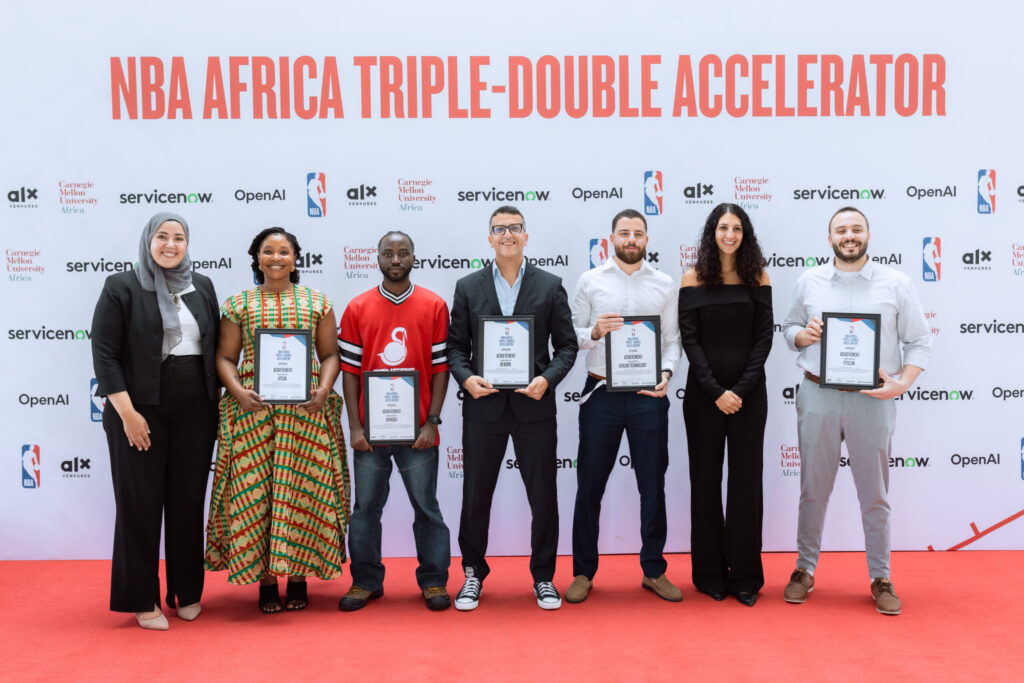
African music’s global ascent has been loud, measurable, and widely celebrated. What remains far less visible is the infrastructure underneath it, the systems that determine who gets paid, when they get paid, and who quietly falls through the cracks. This tension sits at the heart of SongDis, a music distribution and payments platform built specifically for African artists, and the company recently gained international validation after emerging as a winner of the NBA Africa Triple-Double Accelerator.
Founded by Melody Nehemiah, SongDis is not attempting to ride the Afrobeats wave so much as interrogate the machinery behind it. Nehemiah’s work is grounded less in optimism than in diagnosis: identifying why African artists remain financially vulnerable even as their music travels globally. The NBA Africa Accelerator recognition marks a turning point, not just in visibility, but in discipline, structure, and long-term ambition for the company.
In this interview, Nehemiah speaks with clarity about the structural failures baked into global music platforms, why “distribution” has become an insufficient promise, and how control over payments may be the most consequential form of power African artists can reclaim.
You’ve spoken about frustration as a starting point. What was the moment when recurring obstacles stopped feeling incidental and began to reveal themselves as systemic failure?
The main issue was payments. African artists could not get paid into their local accounts on time or in their own currencies. Independent artists also began to realise that distribution alone wasn’t enough; they wanted access, the same access record label artists have.
Artists would distribute music, generate streams, and then wait months for payments, face random account freezes, or lose access to platforms without local support. At first, it looked like individual mistakes. But when the same problems kept appearing across countries, distributors, and genres, it became clear this wasn’t user error. It was infrastructure that wasn’t built for African creators.
Global platforms often frame Africa as a market that needs to “adapt.” What assumptions did you have to actively dismantle when designing SongDis for the continent?
We had to unlearn the idea that African users can adapt to global systems. Most global platforms assume stable internet, international bank accounts, credit cards, fast identity verification, and self-service support. African artists often have none of that.
So we built for low bandwidth, local payments, WhatsApp support, and artists who are learning the business while actively releasing music, not after. The system had to meet artists where they actually are.
Distribution is frequently marketed as empowerment. At what point did you realise that, without control over money, distribution can become another layer of dependency?
It was completely intentional. Late and unclear payments keep artists powerless. If you don’t know how much you’ve earned, when you’ll get it, or whether it will arrive at all, you can’t plan, negotiate, or invest in your career.
We designed payments to be fast, transparent, and local because control over income changes an artist’s position in the industry. Once artists understand and receive their earnings properly, they stop operating from a place of dependency.
As AI becomes embedded across music platforms, artists increasingly fear becoming abstractions—data points rather than decision-makers. How does SongDis avoid reinforcing that imbalance?
Most AI in music is designed to optimise for platforms, not artists. It tells you what performs well, but it doesn’t tell you why your revenue dropped, why your release was rejected, or why your account was blocked.
Our AI is built to explain what’s happening. It shows why a song is growing, why earnings changed, and what’s affecting visibility. The goal is to replace guesswork with understanding. Artists shouldn’t have to blindly trust systems they don’t understand.
Scale often demands distance. In a context where trust is already fragile, how do you grow without reproducing the same detachment artists experience from global platforms?
By scaling systems, not relationships. Distribution, reporting, and payouts can be automated. But disputes, problems, and guidance require human support.
When something goes wrong, artists don’t need another dashboard. They need someone who can actually fix the issue. In markets where infrastructure fails often, trust is built through response, not automation.
Winning the NBA Africa Accelerator brought visibility, but what internal pressure did that recognition introduce behind the scenes?
It forced us to become more disciplined and more accountable. Before the accelerator, we were mostly reacting to problems as they came. Afterward, we had to document processes, define our product clearly, and build with long-term stability in mind.
It shifted us from survival mode into a more structured way of building.
Much global tech advice is built on trust in institutions that often fail African users. How do you filter that advice without discarding its value entirely?
Most advice assumes stable infrastructure and high institutional trust. That doesn’t exist here.
So instead of copying models, we extract principles, transparency, reliability, and user control, and rebuild them for environments where systems fail more frequently, and trust has to be earned continuously.
There’s a persistent narrative that African artists are underpaid because they’re uninformed. From your vantage point, where does responsibility truly lie?
The system is intentionally opaque. Complex contracts, unclear royalty statements, hidden deductions, and delayed reporting make it difficult for artists to know what they’re owed.
What looks like a lack of knowledge is often the result of designed confusion. Opacity benefits the system, not the artist.
Streams are often treated as the ultimate marker of success. What, in your view, constitutes meaningful global reach for African artists?
Meaningful reach means artists can earn real income, tour, license their music, and still own their work. Streams alone don’t build sustainable careers if there’s no economic stability behind them.
If SongDis works exactly as intended, what should change in how African artists experience the music industry day-to-day?
They should stop feeling confused, dependent, and excluded, and start feeling informed, paid, and in control.
That shift is ultimately what matters. Not awards, not accelerators, not external validation, but whether the system finally works for the people inside it. Still, moments like the NBA Africa Accelerator win signal that the questions SongDis is asking are no longer fringe. They are becoming difficult to ignore.
If SongDis succeeds, it won’t be because African artists were made more visible to the world. It will be because the infrastructure beneath them was finally built to hold their weight.