Quite the Odd Future: Tyler, The Creator Was Destined For. Tyler, The Creator’s trajectory from shock-rap provocateur to globally recognized cultural architect is less about reinvention and more about intentional evolution.
Over the past decade, the American singer of Nigerian descent has built a career defined by control, creative autonomy, and a refusal to conform to industry or cultural expectations, a path few artists navigate successfully.
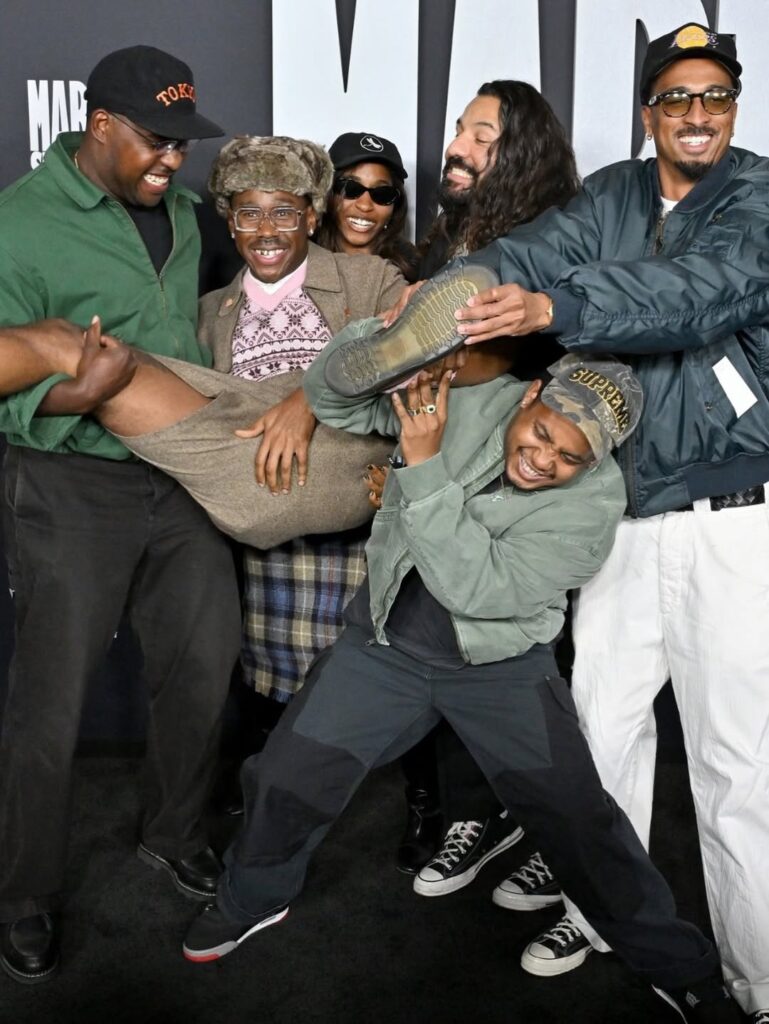
Tyler first gained attention as the central force behind Odd Future Wolf Gang Kill Them All (OFWGKTA), a Los Angeles collective that disrupted early 2010s hip-hop with its confrontational tone, DIY ethos, and internet-first audience cultivation. The group, which included Earl Sweatshirt, Frank Ocean, Syd, and others, bypassed traditional music industry pipelines, creating a self-sustaining cultural network that blended chaos, humor, and raw creativity.
While Odd Future was often framed as anarchic, Tyler’s influence ensured the collective maintained a consistent aesthetic and strategic direction, laying the groundwork for the creative infrastructure that would define his career.
Within Odd Future, Tyler, The Creator’s role extended far beyond performing. He produced records, directed visuals, and designed branding, effectively functioning as the group’s creative architect. His approach predated the industry-standard title of “creative director” for artists, emphasizing cohesion, intentionality, and the orchestration of an entire ecosystem rather than simply delivering music.
Tyler’s personal background adds a further layer to this narrative. He is of Nigerian descent, raised in Los Angeles by his mother, with limited connection to his father. While this heritage is not central to his music or public persona, it underscores a recurring theme in his career: the ability to construct a world of his own making, unbound by inherited cultural or industry frameworks. In other words, Tyler did not inherit access; he built opportunity.
Early in his career, Tyler often courted controversy, and his public persona eclipsed the depth of his work. Tracks like “Colossus”, however, reveal an artist grappling with the pressures of visibility, audience expectation, and personal identity — themes that would come to define his later work. This shift is evident across albums such as Flower Boy, IGOR, and CALL ME IF YOU GET LOST, each of which demonstrates a meticulous approach to storytelling, sonic cohesion, and emotional narrative.
Tyler’s approach to touring reflects this same intentionality. His CALL ME IF YOU GET LOST tour grossed over $32 million and sold nearly 400,000 tickets, placing it among the most commercially successful hip-hop tours of its time. Subsequent global touring runs have further cemented his ability to scale productions while maintaining a connection to audiences — balancing arena-level spectacle with community-oriented experiences, including radically accessible shows. For Tyler, touring is less about extraction and more about participation, turning live performance into an extension of his creative ethos.
Similarly, Tyler’s Camp Flog Gnaw Carnival, which began in 2012 as a small, artist-led block party, has evolved into a major festival attracting tens of thousands of attendees and multi-genre lineups. Camp Flog Gnaw functions as both a cultural showcase and an infrastructure, providing emerging artists with exposure while reinforcing Tyler’s vision of community-driven creativity.
Perhaps the most defining aspect of Tyler’s career is his relationship with identity. He has never explicitly defined his sexuality and has spoken sparingly about his Nigerian heritage, yet these elements do not diminish his visibility or impact. Instead, they illustrate a central principle in his work: identity is lived, not performed for the audience. By refusing to package himself according to expectation, Tyler disrupts modern celebrity norms that equate legibility with value.
Tyler, The Creator’s legacy is still in formation, but it is clear that his career is not an accident. From the chaos of Odd Future to the carefully constructed worlds of his solo albums and festivals, Tyler demonstrates what happens when creative vision is treated as non-negotiable. He builds, he defends, and he executes, and in doing so, he reshapes the rules for artists who follow.