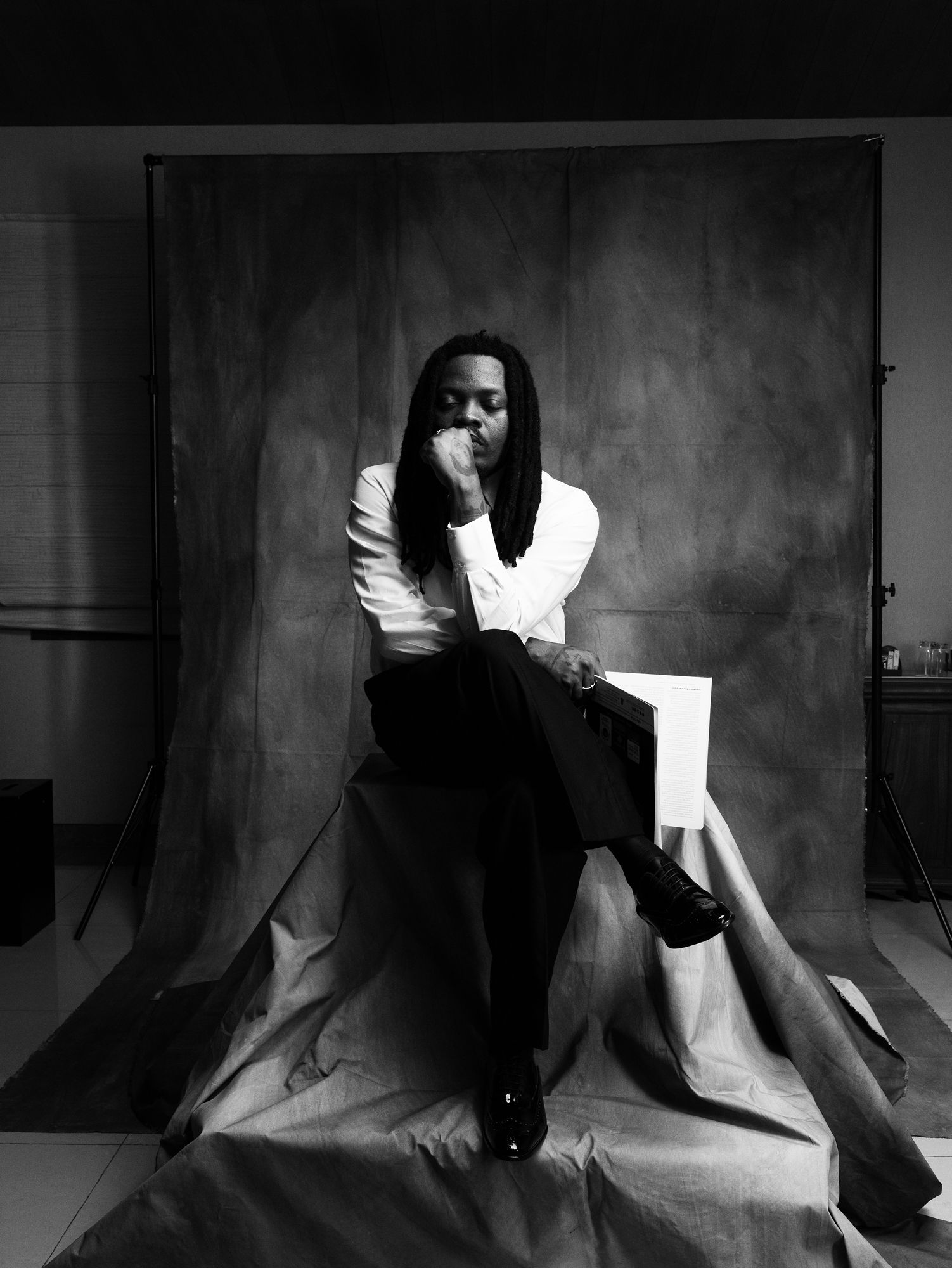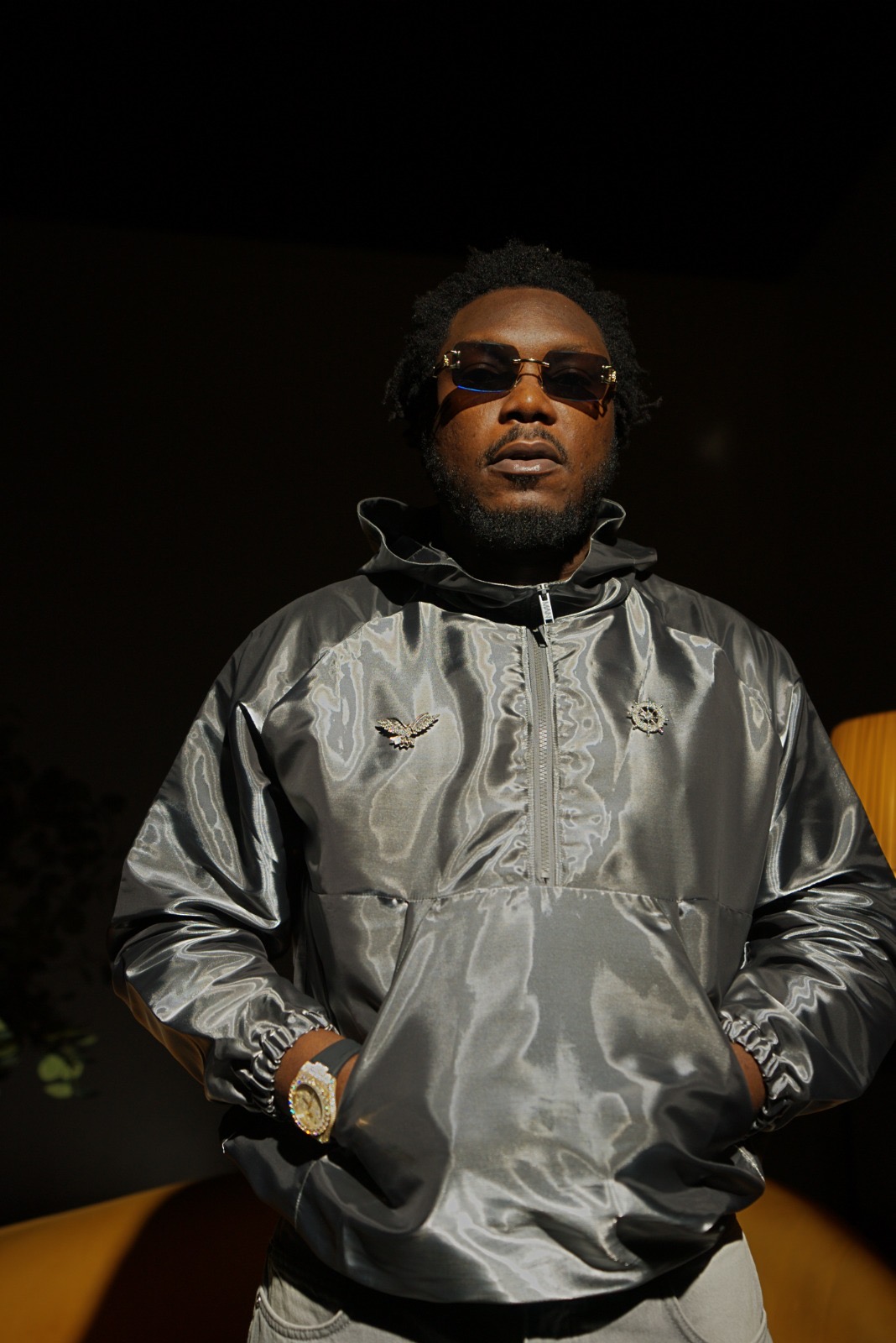
Kavali King is one of the most consistent voices shaping Uganda’s new wave of hip-hop. His artistic journey has taken him from writing lyrics in high school and participating in battle rap to developing a more expansive creative identity, one that places personal experience, emotional honesty, and visual storytelling alongside the fundamentals of rap.
His 2025 album, Sensitive, represents a significant chapter in that evolution, offering a closer look at an artist confronting vulnerability, grief, masculinity, ambition, and survival through music.
But Kavali’s ambitions extend beyond his own catalogue. He sees his journey as part of a wider movement to push Ugandan hip-hop towards greater international recognition, while remaining conscious of the compromises artists may face as they navigate an evolving industry.
His approach to music is guided by instinct, but also by a desire to create work that connects with listeners on a deeply human level. In this conversation with Eve Muyanja for UpperEnt, Kavali reflects on the emotional world behind Sensitive, the quiet years that shaped his career, the importance of protecting his artistic identity, and the vision guiding his next chapter.
On Sensitive and the Power of Vulnerability
Eve Muyanja: Your 2025 album Sensitive feels like a deeply personal body of work. There is a sense that you are allowing listeners into parts of yourself that might otherwise have remained private. The project touches on vulnerability, grief, masculinity, ambition, and survival. What did the title mean to you, and what were you trying to communicate through the album?
Kavali King: “Sensitive was me choosing honesty over armor.”
For Kavali, Sensitive was more than an album title. It represented a particular state of being, one in which he felt vulnerable, open, and unguarded. He also understood the title through the idea of sensitive information: confidential pieces of himself being released into the world, track by track.
Music became a means of processing what he was experiencing, functioning as therapy, emotional release, and a survival mechanism. Rather than separating difficult emotions from his creative life, he found a way to channel them into his work.
Whether it’s pain, anguish, or something negative, releasing it heals me.”
Eve Muyanja: Vulnerability is often treated as something an artist has to overcome, particularly in hip-hop, where there can be pressure to project toughness. But you seem to approach sensitivity differently, almost as a creative advantage. How does being sensitive influence the way you observe the world and translate those observations into music?
Kavali King: “Sensitivity is how I catch what other people ignore. Or miss.”
That perspective informs more than Kavali’s writing. It shapes the way he thinks about music as a complete experience, from the emotions behind the lyrics to the sounds that carry them. His creative process is not restricted to one method. He moves between writing, freestyling, and building songs, allowing the demands of each idea to determine how it develops.
“I can write, freestyle, build, all three,” he explains. “Usually I prefer a beat to tell me who I need to be that day.”
Although rap remains the foundation, Kavali does not approach a song as simply a collection of verses over an instrumental. His interest extends to the emotional environment a record can create and the experience he wants to leave with a listener. The music begins with hip-hop, but the creative possibilities are not necessarily confined by genre.
On the Making of “Ya Salawo”
Eve Muyanja: That fluidity is particularly interesting when you consider “Ya Salawo,” one of the defining tracks on Sensitive. You remember being drawn to the instrumental almost immediately, but rather than rushing into the writing process, you spent days listening to it and processing your emotions. Can you take us through how that experience eventually became a finished record?
Kavali King: “It was one of those beats that catch you on the drop the first time you hear it.”
The instrumental made an immediate impression, but the song did not arrive all at once. Kavali spent several days returning to the beat, listening repeatedly and allowing his emotions to settle before the different elements began to come together. The verse came first, followed by the hook.
The recording session eventually took place in Muyenga at around two or three in the morning, with collaborators Unity and Bayo joining him in the studio. Despite the time spent sitting with the instrumental beforehand, the final session moved quickly once everyone understood the direction.
“I told them the vision,” Kavali recalls. “And we finished it in like two hours.”
Eve Muyanja: You return to the word vision throughout your reflections on music, whether you are talking about the making of a song or the ambitions you have for your career. It seems to suggest that you are thinking about something larger than individual releases. Where does that sense of vision come from?
Kavali King: “The room was small, but the vision was never small.”
That statement also captures the contrast between Kavali’s early circumstances and the ambitions he carried from the beginning. Before the recognition, there were battle rap sessions after high school classes, lyrics scribbled during lessons, and long periods spent developing his craft in small rooms. The circumstances were modest, but the desire to build something meaningful was already present.
For Kavali, the journey has never been only about producing the next song. Each release belongs to a larger process of discovering what he wants his music to represent and how far he can take that vision.

On the Early Years and Discovering His Calling
Eve Muyanja: Before the recognition that comes with building a career, there are often years of work that nobody sees. Your journey began with battle rap, writing lyrics during lessons, and trying to find opportunities while you were still in high school. You also remember selling two songs you had written on actual sheets of paper for an amount of money that felt enormous at the time. What did that experience mean to you?
Kavali King: “That showed me people really appreciated what I had. It wasn’t something I could brush off anymore.”
That early experience gave Kavali a tangible indication that something he had created could mean something to another person. What had previously been an interest or personal pursuit now carried the possibility of becoming something more. The appreciation was important because it offered an early confirmation that his work had value beyond his own belief in it.
Over time, that connection with listeners continued to reveal itself in different ways. Fans cried while listening to his songs, audiences rapped his lyrics back to him word for word, and younger artists found inspiration in his work. These moments helped reinforce his relationship with music and the sense that his path was becoming increasingly difficult to separate from who he was.
“I think it chose me before I chose it.
Eve Muyanja: When people look at an artist’s career from the outside, they often see the releases, the performances, and the moments when the audience begins responding. They do not necessarily see the years of uncertainty, repetition, and work that come before those moments. What do you think people misunderstand most about the journey?
Kavali King: “They don’t see the thousands of hours. The quiet years where you work more than the loud years.”
That distinction is important to Kavali’s understanding of success. He does not romanticise the grind or suggest that the difficult years automatically lead to recognition. Instead, he draws attention to the invisible labour involved in developing a craft and sustaining a vision before there is widespread attention to validate it.
The quiet years are part of the story, even when they are absent from the public narrative. They are the periods in which an artist continues working, refining an identity, and trying to make something worthwhile without knowing exactly when the work will be recognised.
On Uganda’s Music Industry and Protecting His Identity
Eve Muyanja: Your reflections on persistence also connect to the realities of building a music career in Uganda. You speak about the need to believe in your work before the infrastructure around you necessarily catches up. What is your perspective on the relationship between an artist’s belief and the support systems available to them?
Kavali King: “Infrastructure follows belief. A lot of people want the system to believe in them first. But that’s not how it works.”
Kavali’s view reflects the tension that can arise when artists are trying to build careers within a developing ecosystem. The desire for recognition and support is understandable, but his perspective places importance on the artist’s willingness to keep building before those structures are fully in place.
That conviction does not mean the challenges disappear. It means the artist must continue developing the work while navigating the limitations of the environment around them.
Eve Muyanja: There is also the question of compromise. As artists pursue bigger opportunities, they may feel pressure to adjust their sound or identity to fit what the industry is willing to support. You acknowledge that following the expected path can sometimes be the quicker route. How do you think about that tension between progress and remaining true to yourself?
Kavali King: “It’s easier to just go with the flow. Compromise your core and move faster.”
For Kavali, the issue is not whether an artist should evolve. His own creative journey suggests that experimentation is necessary. The question is whether that evolution preserves the identity underneath the music or gradually replaces it in pursuit of acceptance.
“The sound can change,” he says, “but the soul can’t.”
That distinction sits at the centre of his artistic philosophy. He wants to explore new possibilities without losing the personal perspective that makes his work recognisable. Commercial progress and creative development do not have to be opposing forces, but neither should success require an artist to abandon the qualities that give the music meaning.
Eve Muyanja: You also seem conscious of the fact that your career represents something bigger than your individual ambitions. You want to contribute to a broader movement pushing Ugandan music towards international recognition. How much responsibility do you feel towards that wider cultural picture?
Kavali King: “The goal is to put this country on the map. That’s bigger than me.”
For Kavali, the ambition extends beyond his own catalogue or career milestones. He sees the possibility of greater international visibility for Ugandan music as a larger objective, one that places his individual progress within the context of a wider cultural movement.
That perspective also informs his interest in visual storytelling. He believes Uganda’s urban artists already have a distinctive sound, but sees the development of equally distinctive imagery as an important part of presenting that music to wider audiences.
“The sound is new,” he says, “so the visuals have to feel as new and disruptive as possible too.”
Eve Muyanja: You seem excited about what this next phase could look like, although there is also some fear attached to it. When you are trying to push yourself creatively and pursue something bigger, how do you interpret that uncertainty?
Kavali King: “Being scared is always a good sign. It means you want something.”
On Reinvention and the Project After Sensitive
Eve Muyanja: You have indicated that your upcoming project will not simply continue where Sensitive left off. Instead, you have described it as a new room in the same house. What does that image tell us about the direction you want to take next?
Kavali King: “A new room in the same house. You recognize the walls, but not the furniture.”
The metaphor suggests an evolution that remains connected to the artist’s identity without repeating the same creative choices. The foundations are still recognisable, but the experience of entering the next project should feel different. That balance between continuity and change reflects the way Kavali views his artistic development: each release should build on what came before while creating room for new ideas.
Eve Muyanja: You have cited Kendrick Lamar, J. Cole, Drake, Wale, and Tupac among your influences. These are artists with distinct approaches to hip-hop, and it is natural for musicians to begin by looking towards the people who inspire them. You have spoken about a point when you realised that trying to sound like your influences was not enough. What changed when you began focusing more directly on your own experiences?
Kavali King: “I started focusing on making music for my life. Giving my life sound and playing it for people.”
That shift towards personal experience is central to the identity Kavali has continued to develop. Rather than treating influence as a blueprint to reproduce, he began using his own life as the material for his music. The objective became to express his perspective in a way that could connect with other people, even when their experiences were different from his own.
His approach to collaboration reflects a similar preference for instinct over calculation.
Eve Muyanja: Your collaboration with Shona Morimoto began after you met in a club and heard her sing. You describe the connection as something that happened naturally rather than as a strategic career decision. What stood out to you about that encounter?
Kavali King: “It wasn’t strategy. It was energy.”
On Life Beyond Music and Creating an Experience
Eve Muyanja: You have also spoken about interests outside music, including agriculture and the satisfaction of watching something grow. That might seem like a departure from the music industry, but it also offers a glimpse into how you see the world. What do those experiences give you outside your work as an artist?
Kavali King: “The fact that the world is bigger than the industry. I’m a student of life first.”
That outlook is revealing because Kavali’s creative approach is shaped by observation as much as by musical influence. He is interested in the experiences that exist beyond the industry, and in the ways those experiences can inform the stories he tells. His music is personal, but it is not detached from the wider world around him.
This perspective also connects to his interest in cinematic music and visual storytelling. He wants the listener to experience more than the sound of a record or the technical ability behind a verse.
“I want listeners to see something, not just hear it.”
Eve Muyanja: That desire to create something listeners can almost see seems particularly relevant to Sensitive. You have suggested that some of the album’s production choices can get overlooked when listeners concentrate on the lyrics. What do you think people miss when they focus only on the bars?
Kavali King: “People focus on the bars, but what’s underneath the bars matters just as much.”
The lyrics remain important, but Kavali wants listeners to pay attention to the complete experience surrounding them. The production, atmosphere, and emotional qualities of a song all contribute to what it communicates. For him, those elements are not simply there to support the words; they are part of how the music expresses its meaning.
Eve Muyanja: Beneath those creative decisions, there is also the personal transformation that has taken place over the years. You have continued recording through difficult periods, including moments when parts of your world were falling apart. When you listen to your older music alongside what you are creating now, what does that progression mean to you?
Kavali King: “You can hear my songs from when I was 19, and hear who I am now.”
His catalogue has become a record of that change, preserving different versions of himself across different periods of his life. The music documents not only how his sound has developed, but also how his experiences and perspective have changed. Rather than presenting a finished version of himself, his work allows listeners to follow the process of becoming.
On Making Listeners Feel Understood
Eve Muyanja: You grew up listening to rap artists who could articulate emotions you did not yet have the language to express yourself. That sense of recognition appears to be something you want your own audience to experience. When someone encounters your music for the first time, what do you hope they feel?
Kavali King: “I’d want them to feel like someone finally said the thing they couldn’t.”
The desire to make listeners feel understood brings Kavali’s reflections back to the emotional foundation of Sensitive. The album is rooted in his own experiences, but the intention is not simply to tell his story for its own sake. He wants the feelings behind the music to resonate with people who may recognise something of their own lives in it.
That connection mirrors what first drew him towards rap. Growing up, he remembers hearing artists articulate emotions he had not yet learned how to express himself. Their music gave language to feelings that were already present but difficult to communicate. Now, he wants to create that same sense of recognition for his own listeners.
Eve Muyanja: Finally, when you think about the younger version of yourself, writing lyrics in high school and trying to figure out how far music could take you, what do you think he would make of Sensitive and the journey that has followed?
The room goes quiet for a moment. Kavali lets out a soft laugh before answering.
Kavali King: “I don’t think the younger version of me knew we’re gonna get this far.”