There’s something slightly chaotic about trying to interview six people at once.Not chaotic in a bad way, just… fluid. Voices overlap. Hands are up. Someone’s mic cuts. Another person joins late. You repeat a question. Someone else answers it from a completely different angle.
And somehow, in the middle of all that, a clearer picture forms. That’s what it felt like getting on a call with SuperJazzClub.
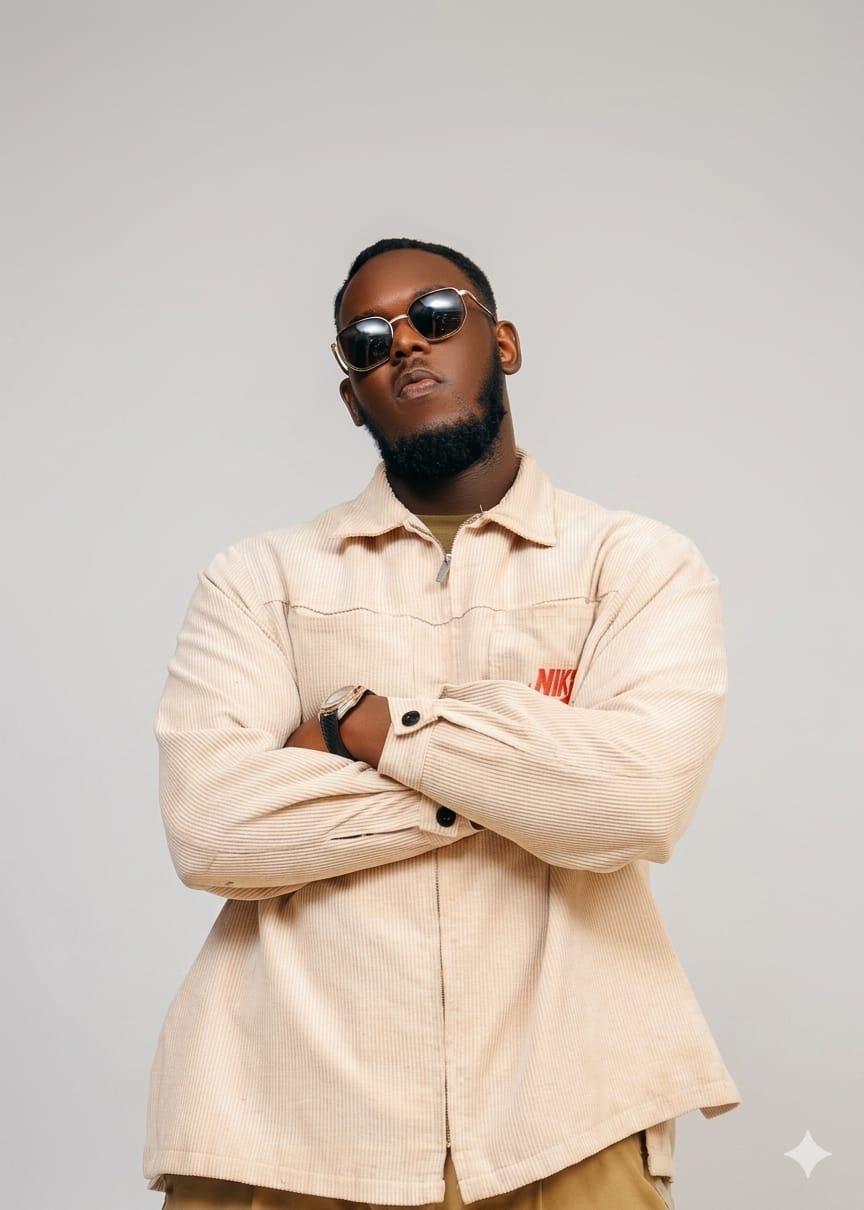
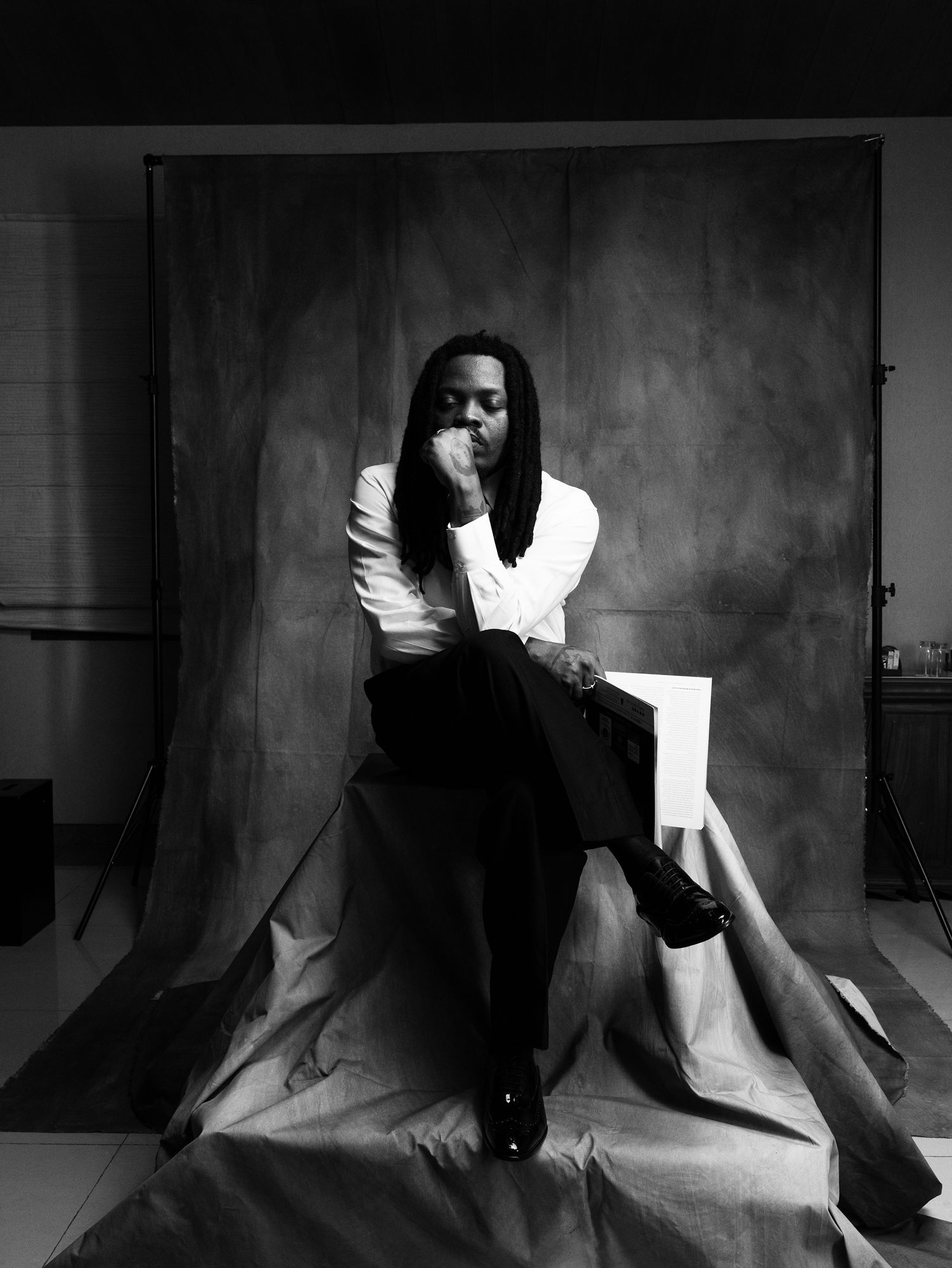
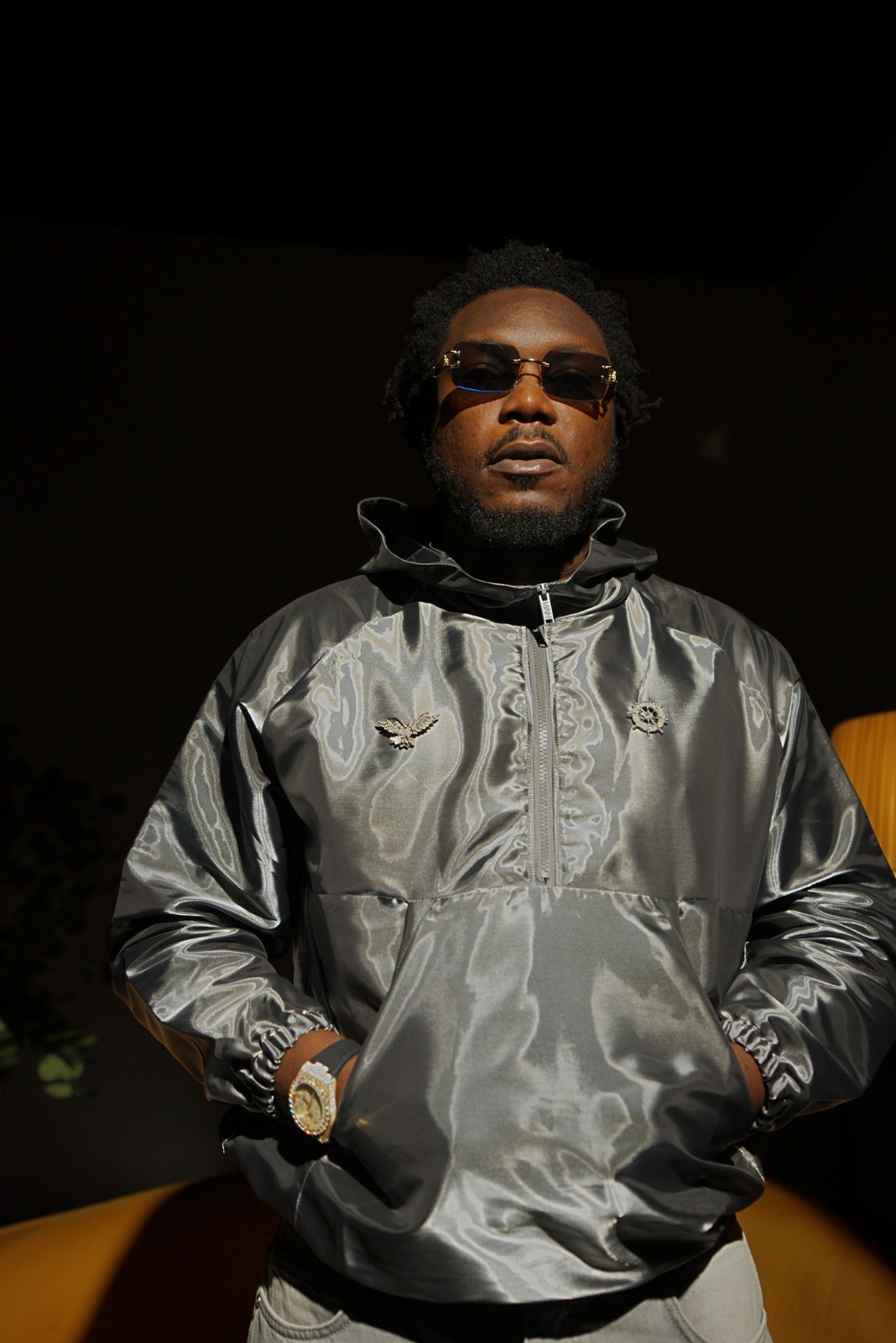
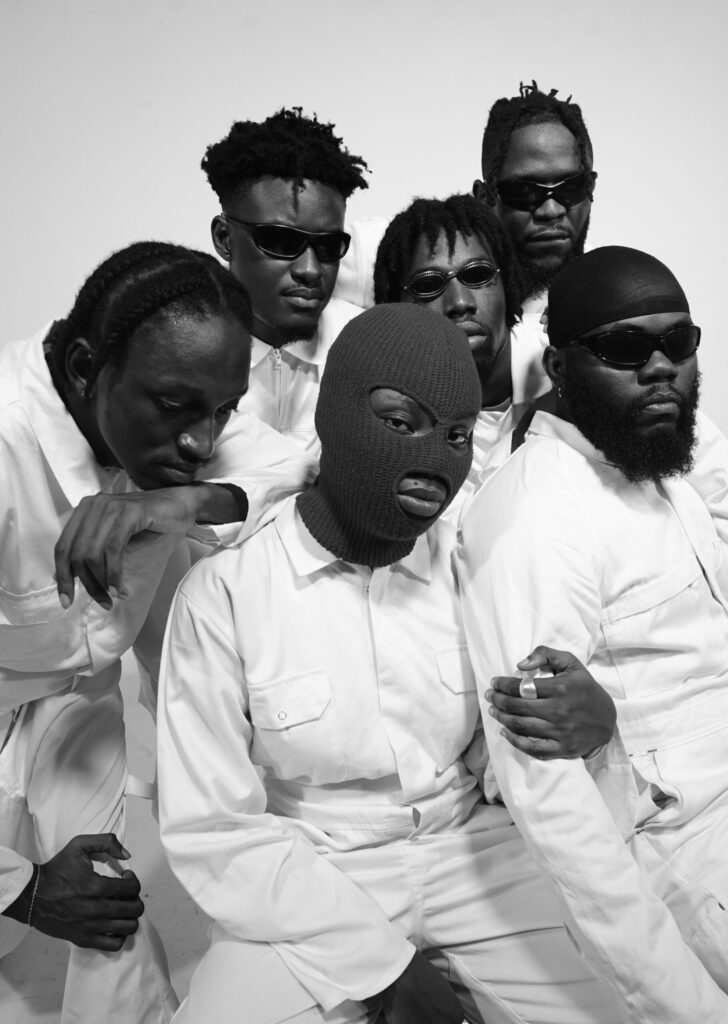
Once it got to 5 pm my time, everyone started settling in, and we were good to go. Obed.Tano. Seyyoh. Ansah. Joey. Biqo. A collective that has, for years now, existed as a tight-knit friend group and a genre-defying music act.
The Ghanaian collective formed in 2018 and came with a tagline I really loved: “Please do not tell your friends about us.” It’s one that always sparked interest, one that did the reverse of what was actually said.
The tagline was the first thing I asked about.
“It was never the goal for us to be a secret,” Ansah says. “If anything, it’s actually a way to get people curious. People will always do the opposite of what you tell them, so you tell them not to share, they share. It’s just us saying, come check us out. It’s a much more effective way of doing it. It’s just the reverse way.
Tano adds to it. “I just feel like when we started, we basically enjoyed making music, not necessarily commercialising it.
So we just wanted to extend our arm to the audience and make them feel how we feel when we hear what we make for the first time, and just enjoy on their own. So yeah, but we never want people to stop feeling how they feel now. We probably have a lot more audience, and however people want to accept our music, we are open. They can choose to gatekeep or not. They can recommend to family, friends, and loved ones. We have nothing against it.”
“Trust is the Way Out”
A group of six people making music together doesn’t seem easy in any way. I ask howthey’ve actually done it for years without leaving anyone behind.”Most of us have known each other for close to a decade,” Biqo says. “When you know someone in and out, you learn to trust their decisions. Over time, we’ve just been able to understand each other. We trust that everybody’s decision is in favour of SuperJazzClub.
That has brought a balance to us in decision-making. Trust is the way out for us.” Ansah is careful not to make it sound too easy. “That does not necessarily mean it’s also been a smooth sail. We’ve had our ups and downs, just like any relationship will have. But the core of it is that we’ve remained who we were when we started. If anything, we’ve just grown those relationships over time.”
I push further — was there ever a conscious moment where friendship had to make room for
something more serious for the music to advance?
“There wasn’t really like a conscious decision being made like, okay, now we need to switch the makeup of this relationship if we need to go to the next level,” Ansah says. “We’ve just remained who we are from the very beginning. The relationships that we built in the beginning have just matured as we’ve gone on. And that’s just kind of what has propelled the music to get to the next level.”
Songs like “Bordeaux” and “Mad” feel deeply personal even as group output. I want to know how that works — six people, different emotional places, how do they make music when everyone is not in the same headspace?
“People have this general sense that okay, there’s ten people in the band, so it has to be ten people represented every time,” Ansah says. “That’s almost not possible in any real-life situation. We have songs that one person has written. We have songs that five people have written. If Biqo writes a song about something, maybe Joey is not in the same headspace.
Well, Joey’s contribution does not necessarily mean he has to write in the same line as what Biqo is saying. Maybe Joey’s contribution is just feedback to the song.” “The goal is to serve the song and what the song needs. If the song needs for one person to write and to play guitar, then that’s what we do. We are not really in the business of trying to ensure that we are all present at every point in time. Somebody might not be contributing to the song, but they are contributing to the visuals. That’s how we operate.”
For All The Good Times
Their 2020 debut is the project I keep returning to. The 8-song tracklist for For All The Good Times starts with July 4 and ends with August 9— it’s structured like a diary, tracking emotion the way diaries actually do. There’s a voice that threads through the whole thing,someone narrating her real-life experience between songs. I’d always wondered about it.
Her name is Claudia. A poet and writer based in Ohio who used to hang around their sessions.”It was just basically her narrating how she’d been feeling over a period of time, just around the time we were making the music,” Ansah explains. “It just kind of made sense to insert that into the music to tie the project together. She’s a writer and a poet. She’s been around our whole creative process. So at the time when we did it, it was just kind of like — oh, it made sense.”
“At the time when we did it, it didn’t really, for us, sound like anything that stood out. It was just like, okay, our friend just telling us how they felt. But looking back at it now and looking at how people received it, I think it carried the message. It was impactful in the way it was supposed to be. I like the fact that people refer to it as that thing that also reminds them of the project and that time period.”
Sonic Evolution
For All The Good Times was 2020. Whine Am is 2026. In between, Monochrome Radio, a string of features and singles. The sound has changed: richer, wider, more settled. I ask what’s actually changed “I don’t think there has been any difference,” Obed says first, then frames it. “I think there has just been a lot more context because we put out more music. That extends the palette of what we’ve done so far.”
Ansah takes longer with it. “When we made For All The Good Times, it was just our second year as SuperJazzClub, and we hadn’t really done much. Most of that influence was just coming from things that we knew then. But over the last few years, I feel like we’ve all grown in our own personal ways. We’ve all learnt new stuff. Even the music that we are making, the vocabulary that we are using to make the music has expanded. We are doing things a little differently now, just as a result of the experience that we’ve had.”
“Like if we made music in 2024 and it sounded like For All The Good Times, I would say that we had failed. Because we hadn’t really evolved from there.” The growth isn’t just musical. They’re photographers, designers, visual artists — the work crosses disciplines constantly. Tano on what that feels like from the inside:
“It’s like putting the pieces of a puzzle together because they go hand in hand — film, photography, music-making. It’s all art forms. It’s a fun moment when you leave the studio, and you have a storyboard for press photos or cover art or a video. It’s just an opportunity for you to expand on what you already started. From the first lyric or the first hi-hat arranged, you just know there’s a long way to go, and you’re eager to finish it. When you’re done, you’re like — yeah, you did something great in the form of art.”
Brazil and the C6 Fest
Songs like Mad and Paradise had Bossa Nova running through them long before SuperJazzClub ever set foot in Brazil. When they finally went to C6 Fest last year, it confirmed something they’d already been reaching toward.
“Brazil, I think it lived and exceeded expectations in terms of the culture, the music,” Seyyoh says. “We got the chance to see a lot of live acts, some from Brazil and some from across the world. It was truly a life-changing experience. Coming from Africa and Ghana, Brazil is such an almost fictional place. It’s so far away. Personally, I only got to interact with Brazilthrough the music I listened to and football. So just being there definitely had its influences on us and has influenced some songs that we have made.”
“Songs like Mad and Paradise have the Bossa Nova influences there. But we hadn’t actually been there at the time, which I find interesting also. And as artists, we definitely would be influenced by what we experience every day. And being in Brazil together was a very novel experience. “
Tano added, ” First off, the place is so far, he laughs, but the culture in Brazil is amazing. The music culture and scene is vibrant, just like we have in Nigeria and Ghana with highlife.
There were a lot of things I personally didn’t expect to experience while going there. And we had a great reception from a couple of artists. Sue Jorge hosted us in his home and studio, and I just want to give a shout-out to that man. He told us about his story — being able to tell us about City of God, doing film when he was young. It was just hella motivational. Music is such a beautiful thing that no matter where you are, it hits you different. Brazil actually hit us different. We bought records. We’re still listening to them.”
Non-Genre Bound Music and the Pressure to Go Commercial
SuperJazzClub have never been easy to categorise from a genre perspective, and they’re clearly not interested in changing that. They exist within alternative music, but blend genres across Afrobeats, R&B, Bossa Nova, highlife, sometimes all of it at once. I ask how they’d describe the sound to someone.
“Yes, I don’t think we boxed in a genre. When we get into the studio, we don’t have intentions of trying to make a specific sound,” Joey says. “Because we are friends and we’ve been together for some time, and we have similar interests. Once we get in the room, the energy keeps flowing. We just keep making stuff and see what sounds good. Out of these experiences and experiments, we come up with sounds. It could be reggae, it could be
highlife, it could be anything. We’re just making music that will resonate with everyone.”
On whether there’s ever been pressure to chase what’s commercially working, Tano says there is no pressure.
“I don’t think it’s been pressure. Making music, you don’t necessarily know what song is going to become popular or not. And you might say Afrobeats is dominating, so it’s easy to try to make it. But that means you’re literally going against what you feel or how you feel music should be done. That’ll mean we’re fake, doing something we don’t know or don’t feel.
That’s not to say we don’t love Afrobeats — we do, we listen to Afrobeats. My favourite Afrobeats song is by Tekno. But the influence to be experimental overshadows us getting in the studio and saying, this is the sound, let’s chase it.” Biqo adds, “When we created SuperJazzClub, it was always about creating how you feel.
We were creating Afrobeats before we even came together and formed SuperJazzClub. We created Afrobeats-influenced songs like Jungle way before this whole Afrobeats-to-the-world conversation became really popular.
There’s no pressure to create any type of sound. We are living our truth, and we are creating how we feel.”
On SuperJazzClub’s influence on the Ghanaian alternative scene as pioneers, Ansah sets the timeline straight on the collective as regards to other Ghanaian alternative groups “We’ve been here since 2018. Asakaa came into prominence around 2020, 2021. We’ve been here way before that movement. And even before La Même Gang as SuperJazzClub, we’ve all been making music individually, contributing to the alternative scene way before all
these movements.”
“But what everybody in this scene is basically saying is the same thing — there are varying ways to do things. Asakaa could have done anything else. They figured out that the thing they related to the most was drill music, which wasn’t a thing in Ghana. They went ahead and did it. Look where that went. You don’t have to sound like the people that came before you if that’s not truly who you are. Ask yourself what is really true to you, and if it’s a Bossa Nova song, go ahead and do it. If it is trap music, go ahead and do it”
Legacy is Not Really the Point
As we wrap up, I ask what they want to be remembered for. Ten years from now, where will SuperJazzClub sit in the story of Ghanaian music? Ansah takes it somewhere personal. “If I’m honest, I personally don’t really care much about where we fall in the conversation. I’ll just be happy if there are people who came after us who were able to firmly do exactly what they love to do. If we’re able to inspire people to do that, that’s the most satisfying thing for me. There are names that people don’t even mention in the conversation, but have influenced us a lot. Have we been able to do for other people what the people we looked up to did for us? That’s the question. To inspire you, start a little collective in your room and be able to take it all the way to São Paulo, play, and meet some of your idols, and collaborate with some awesome people. I don’t really know where we’re
going to be. Personally, I don’t really care.”
For Obed, it’s about the experience. “One of the core things in life is to experience. SuperJazzClub, in its core, was meant as an altar for all of us to experience a collective spirit, some sort of collective uniformity in how we thought and in how we made music. As to what we’re going to leave behind, if somebody is able to listen to SuperJazzClub and wants to experience what we’ve been able to accomplish, the goal is done. And that speaks to life Eight years in, across multiple projects and cities — Accra, Lagos, São Paulo, Montreux —
SuperJazzClub continue to move with intention but without pressure.
They’ve helped shape Ghana’s alternative scene, but more importantly, they’ve remained true to themselves.
And that’s what makes it work. “We’re just getting started, man,” Tano says when I ask about the group’s plans, and it is hard not to agree.